Showing posts with label Ralph Fiennes. Show all posts

Tuesday, May 17, 2016

A Bigger Splash


**Spoiler Alert**

Director: Luca Guadagnino/Starring: Tilda Swinton, Ralph Fiennes, Matthias Schoenaerts, Dakota Johnson and Aurore Clement

I usually detest remakes; finding them an unnecessary and inadequate copy of the original but Italian director Luca Guadagnino's A Bigger Splash, which re-imagines Jacques Deray's 1969 La Piscine, establishes its own dramatic identity. Guadagnino transports the original story from the French Mediterranean to a Sicilian retreat, where psycho-sexual tensions motivate the characters actions. Guadagnino's film is a sensual delight. Hedonistic diversions serve as opportunities to not only unshackle the sexual potential of a friendly sojourn, but also crash a couple's almost inviolable marriage.

The premise is something we've seen a billion times before; a small group of people gather together in a scenic retreat presumably to relax and enjoy one another's company. What follows thereafter is also something we've seen many times before; characters dealing with barely suppressed acrimony, sexual tension and past resentments, which eventually erupt. In this case, the end result is extreme and tragic. Though the plot is hardly new, Guadanino's cast makes the story's psychological richness compelling.

Tilda Swinton plays Marianne Lane; a rock star of considerable renown, who, with her documentary filmmaker boyfriend Paul (Matthias Schoenaerts) decide to rent a place in Sicily for a getaway that serves in a large part as a convalescent retreat. Marianne has just had throat surgery, which has rendered her literally speechless--or nearly so. While Marianne recovers from her surgery, Paul recovers from alcoholism. From what we see of their physical relationship, we can safely assume Paul and Marianne are very much in love.

But their blissful state is interrupted by the arrival of Marianne's old flame and Paul's former friend and collaborator; Harry Hawkes (an exuberant Ralph Fiennes) and a beautiful, young woman he introduces as his daughter; Penelope Lannier (Dakota Johnson). From Marianne and Paul's reactions to his presence, we can safely gather they aren't entirely happy to see their manic friend, for reasons partly obvious.

As the parties spend time under one roof, respective back stories come to the fore in flashbacks as we see Marianne and Harry from long ago when their passionate relationship burned stellar hot. We also see Harry and Paul in the past during the making of a music documentary. After Harry asks Paul if he would like to meet Marianne, the documentarian eagerly assents. Harry's act of generosity comes back to haunt him after Paul and Marianne's relationship becomes viable. Interestingly enough, we never see Paul and Marianne interact in a flashback.

Though Marianne seems firmly committed to Paul, Harry slowly makes attempts to seduce her and woo her back. Meanwhile, Penelope begins her own slow seduction of Paul, who resists her in spite of her powerful sex appeal.

The sensual charms of the Sicilian milieu are irresistible not only to the characters but may be to the audience as well. Guadagnino spares none of our senses. The group's naked or half-naked bodies delight the eyes while the island's culinary pleasures tempt our palates. A delectable sight of a large fish cooked and coated in a thick layer of breading is but one of the film's gustatory visuals. A scene where Harry shares a memory from his professional life as a music producer on the Rolling Stones' album Emotional Rescue serves as prelude to his actually playing the song of the same name for the gathering, who fall under the music's enchanting spell. No one is more carried away by the music than Harry, who ends up outside, rapturously overcome by the music.

The contrasts in personality between Harry and Paul are very conspicuous. Where Harry always seems annoyingly "on" and always game for a good time, Paul is more reserved and introspective. As the film moves along and Harry's play for Marianne becomes more aggressive, one might wonder which man is better suited to be her companion. Everything in Harry's nature seems related to his passion for music, which makes he and Marianne the rock star, the more logical pairing.

As the four loll about the pool and wander about the arid surroundings, the tension begins to build. Harry presses Marianne for sex, hoping to rekindle their former relationship while Penelope never tires of assailing Paul's nearly impenetrable wall.

During a village festival, Harry commandeers a karaoke machine in a town bar. Harry's spirited performance begins to draw a large crowd. During one song, he waves Penelope over. She joins him in a sexy, highly inappropriate dance that raises a few eyebrows in the village.

As Harry and Penelope's vacation nears an end, all the pent-up tension detonates, resulting in a tragedy that seems almost inevitable.

The story's conclusion leaves the audience with several questions. When Paul and Penelope wander off on a day-long walk, does he finally give into temptation as she stands beside a rocky pool, naked and inviting? Is the father/daughter relationship between Harry and Penelope really a sham? Are they in fact, lovers? Their relationship is called into question when Marianne and Paul discover Penelope is actually 17 though she has claimed all along to be 22. And Penelope's cold demeanor toward Marianne is that of a jealous rival rather than a daughter.

A film like A Bigger Splash relies heavily on its cast to handle its rich psychology, which is not a problem for someone like Tilda Swinton, who excels in roles like Marianne. Schoenaerts' broody performance is a perfect counterpoint to Fienne's Harry, whose emotions and simmering sexuality are never concealed. Harry's sexual power is a bomb blast that spreads in all directions. We even see its subtle, barely perceptible effect on Paul. Fienne's performance is almost over-the-top but he grounds his character enough to make him credible. He certainly makes everyone else look as though they are grossly underplaying their parts. I don't know that Johnson's character is drawn as well as her co-stars but she handles her role well enough.

One would think Guadagnino might indulge himself in visual sweeps of his Sicilian home but he never goes for breathtaking pans or arresting long shots of the island's topographical beauty. Though the surroundings are very much in evidence, he never lets the film become a mere travelogue.
Guadagnino leaves us with unsolved mysteries that he wisely avoids addressing. We come away from the film, having had an intoxicating, sensual experience. Behind the epicurean delights and Mediterranean sunshine is an engaging but ultimately tragic story.

Sunday, November 8, 2015

Spectre


**Spoiler Alert**

Director: Sam Mendes/Starring: Daniel Craig, Lea Seydoux, Christoph Waltz, Ralph Fiennes, Monica Bellucci, Ben Whishaw, Naomi Harris, Dave Bautista and Andrew Scott

What would the world do without 007? We would have suffered a great many disasters as a species if Mr. Shaken, Not Stirred weren't on the job. And where would movie audiences be without Bond movies to liven up multiplexes every few years? I suppose the world will never tire of James Bond, nor will I. No matter the cast, I can always find time to see the world's greatest spy onscreen. Director Sam Mendes has found himself a comfortable niche as a Bond-director and has done quite well. His latest is fun and very faithful to the series.

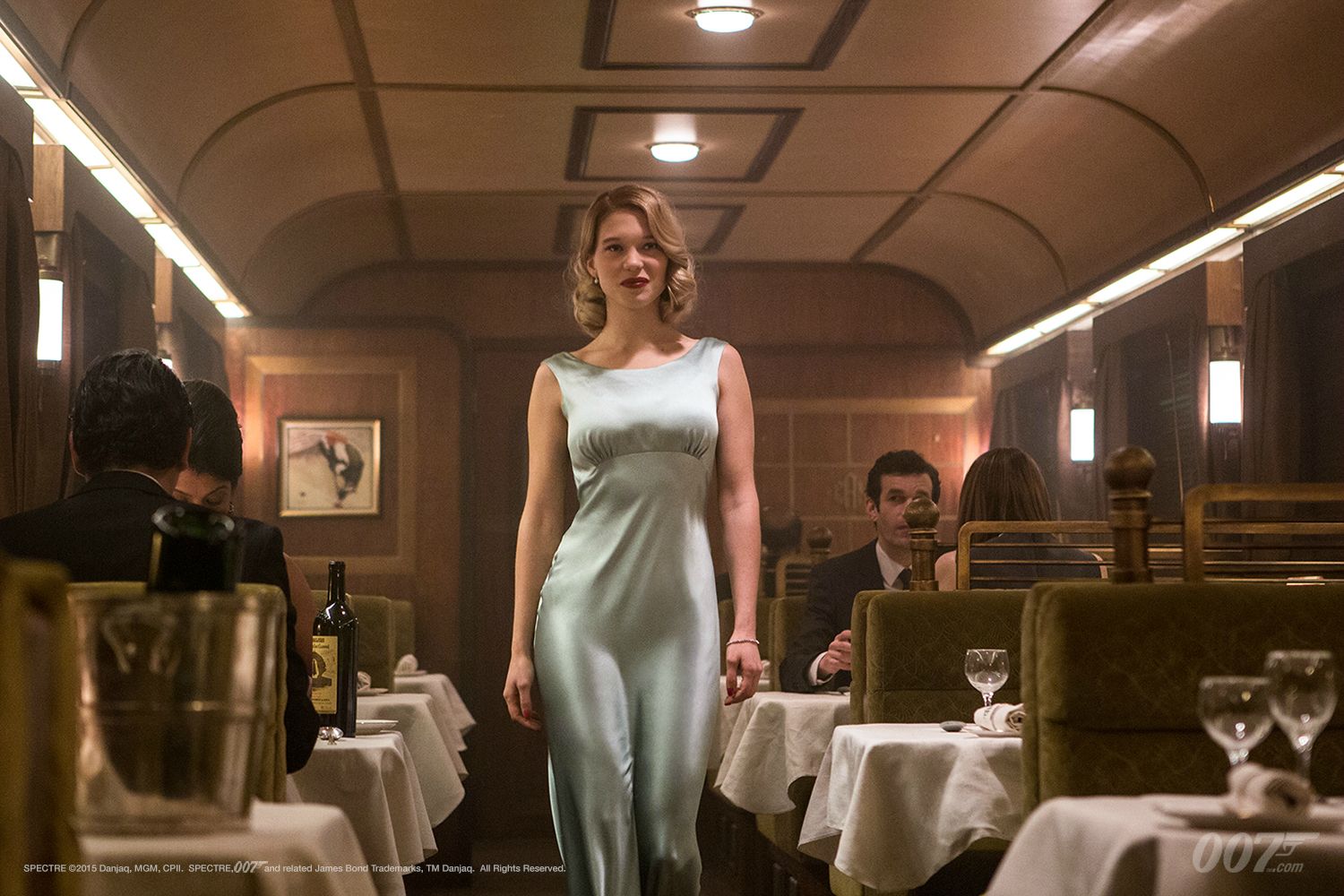
Spectre looks and feels like a Bond film and has terrific action sequences, so what more does one need? Do we need a director to reinvent the series; tinker with a formula Bond fans have come to expect and cherish? No. What do we ask of any Bond movie but action, cool cars, cooler gadgets, psychotic baddies, beautiful women and romantic locales? You get all that in the latest film and a fun villain in Oberhauser (the always entertaining Christoph Waltz) and some choice babes in Lucia (luscious Monica Bellucci) and Madeleine Swann (sexy Lea Seydoux). The latest film also attempts to tie all the Daniel Craig/Bond Films together in a story that links the various villains in a way Bond films never have.

Bond finds himself in hot water with M (Ralph Fiennes) and British intelligence after conducting a mission in Mexico without his superiors' consent or oversight. Grounded from duty, Bond learns the double-0 program may be scrapped by another intelligence agency run by a man referred to as C (Andrew Scott). Said agency's objective is to link with other intelligence-gathering organizations from around the world, thereby creating the ultimate surveillance network. Of course we know that anytime 007 is told the world no longer needs his kind, he is going to prove otherwise. Though M intends to keep Bond under watch and tethered to London, 007 has other plans.

Not long after, Bond finds himself in Austria visiting the shadowy personality known as Mr. White (Jesper Christensen); who we've seen in previous Bond films. Mr. White's link to various international crime syndicates includes one called Spectre, who Bond learns of after Q (Ben Whishaw) identifies a symbol found on a ring in White's possession. Bond manages to infiltrate a Spectre meeting in Rome; a secret society-like affair run by a man named Oberhauser. Well aware of 007's presence, Oberhauser's thugs set upon Bond, who manages to escape with the help of a sleek Aston Martin sports car, which was previously "borrowed" from Q's lab. The Aston Martin is naturally loaded with all manner of gadgets and weaponry, which Bond employs in a thrilling car-chase through the streets of Rome.

Bond also learns the various high profile criminals he's encountered in his past are all linked to Spectre. Hoping to locate the headquarters, Bond searches for Mr. White's daughter; Madeleine Swann, who may have information about the organization. Like all Bond girls, Swann is beautiful and seductive and knows more than she is willing to divulge. The two manage to elude more of Spectre's thugs, including a muscle-bound menace known as Hinx (Dave Bautista). Bond and Swann's investigation leads them to Tangiers, where a secret room in Mr. White's apartment provides useful information about Spectre's whereabouts.

After locating the headquarters in a enormous crater in the desert, Bond and Swann gain access to the complex, only to be captured by Oberhauser's men. The requisite torture scene follows--a staple in all Bond films--which in turn follows another Bond movie mainstay; the disclosure of the villains' grand plan. Spectre's (and Oberhauser) scheme involves the control of a world-wide surveillance system; a counter to 9 Eyes ; a vast surveillance system to be monitored and controlled by the nine most powerful governments of the world. Bond discovers C is in fact an operative of Spectre who intends to implement Oberhauser's plan. But another fact comes to light; one that links Bond and Oberhauser in a surprising way.

As stated previously, we look for and expect Bond films to follow a formula, which Spectre achieves with happy fidelity. The beautiful aerial shots of Austria, Rome, London, Mexico City and the deserty landscape of Morocco are intoxicating visual tics for which the series is known.

Lea Seydoux makes an excellent love-interest; her beautiful blue eyes and French accent compliment Craig's own.

Bond's victory at the end seems to come a little too quick and easy but that's a very minor criticism for a movie I enjoyed.

The question that kept nagging me as I watched the film was: will Craig return again? I've heard he is to do one more but given the ending of his latest, it is hard to say whether that's true. Of all the actors who have played 007, I must say Craig is the Bond I like most after Connery. He brings ruggedness as well as gravity to the role. His version is very physical.

If Spectre is his last, I'll be sorry to see him go but am pleased he performed the role in earnest. If he has one last film left in him, so much the better. If not, I'll always be excited to see the latest James Bond movie. It's nice to know we can expect to see him every couple of years. Hope to see him again.

Saturday, March 15, 2014

The Grand Budapest Hotel

**Spoiler Alert** Dir. Wes Anderson. Starring: Ralph Fiennes, et al.

It's difficult talking about my impression of Wes Anderson's new film because I want to celebrate his feverish imagination, which seems boundless. On the other hand, I tire of his stylistic tics and the whimsy that's come to typify his movies. I'm a huge fan of Rushmore; a film that announced a style and manner of storytelling that wasn't fantasy but wasn't reality either; a kind of universe only Anderson could craft and one that characterizes his work. Since Rushmore, Anderson has continued on this course; The Royal Tenenbaums, The Life Aquatic with Steve Zissou, The Darjeeling Limited, Moonrise Kingdom and now The Grand Budapest Hotel.

His latest has become a little more un-moored from reality (nothing wrong with that) but I wonder if Andersonian whimsy has become wearisome.

I always believed Van Gogh's work resembles no others. If one were asked to identify his work among a thousand other paintings, one could easily identify a Van Gogh; his style is that distinctive. The same can be said of Anderson's films. No other filmmaker's work matches Anderson's in look, tone and characterization and that is something to be commmended. But that uniqueness can sometimes get in the way of one being fully immersed in his stories. So many images and quirky camera movements often draw attention to themselves in a way that distracts the viewer from the story. The Grand Budapest Hotel is no exception.

There is so much to admire and like about his new film; the set designs, the rich, striking visual aesthetic and Ralph Fiennes' comic performance, around which everything in the film orbits. I also liked the hotel lobby; a vast interior often seen in a long, wide-shot; a visual that calls to mind the lobby in The Shining with its exaggerated dimensions, which reduces all human activity to insectile proportions. It is also interesting how the hotel's cake-like exterior is recalled in the pink confectioner's boxes later in the film and the pastry devoured by prisoners.

The story is a story within a story as Tom Wilkinson the author tells the story of the hotel's owner and former bellboy (F. Murray Abraham as an adult, Tony Revolori in the past), who in turn tells the story of the erstwhile concierge of the once grand hotel. It is a clever narrative approach, which Anderson handles deftly.

Ralph Fiennes plays the concierge; Gustav H, whose demanding attention to detail and client satisfaction makes him the consummate role model for the young lobby-boy he takes on as a protege. Gustav's habit of romancing elderly guests of the hotel takes a dangerous turn when he is accused of murdering Madame D.; an elderly customer Gustav has seduced for many seasons. Hi-jinks and mayhem ensue, involving many--an incredible cast Anderson assembled for the film. Gustav first avoids capture then is apprehended, subsequently serving time in prison.

I found some scenes amusing but as the film wore on, the fairy-tale setting and Anderson's odd-ball characters all wear out their welcome. A scene where soldiers billeted in the hotel shoot at one another from hotel room doors is something that should have been funny but falls flat as an old joke.

The preview promised much; I thought Anderson would finally bring me back into his fan-fold but half-way through the film, I realized I was in for another disappointment.

I've met many people who believe Anderson is a genius--a claim I can't entirely deny. Watching his film, one recognizes his fierce intelligence; a creative brilliance running through every scene. Unfortunately I believe him to be a genius without a masterpiece. He may reward my patience with something otherworldly and magnificent someday. The Grand Budapest Hotel offers intimations of greatness; a summit he has yet to reach. I'm sure he'll get there eventually.