Monday, January 18, 2016

Some Brief Thoughts on the Oscar Nominees


It's that time of year when gripes and grumbles become common modes of expression. Of course I'm talking about movie-lovers reactions to the Oscar nominations, which always leave those who care about movies disgruntled about who did or didn't get an Oscar nod. I myself am one of those people though it's axiomatic that Oscars mean nothing and have little to do with artistic merit. But I must say, I can't remember of a year when the Academy was more spot on with the nominees. Though I have some problems with omissions and inclusions, they are fairly minor. This year's crop was quite excellent and I was pleased that some of the most deserving--Room and The Martian, weren't overlooked.

But there are other reasons to grumble; the glaring absence of minority nominees. It's hardly a shock; Hollywood's lack of equal opportunity is ever a constant. Maybe that will change next year...nah, that would mean an industry that is almost exclusively liberal would have to actually be liberal.

So here I am again to offer some thoughts and reflections on the nominees. And again, I relegate my commentary to the most attention-grabbing categories--my apologies to the other nominees--to spare what few readers I have my endless musings.

So here we go:

BEST PICTURE--
I can only grouse about two nominations here: Bridge of Spies and Mad Max: Fury Road. I think it's safe to say the former was nominated because Spielberg was at the helm while the latter...? I didn't blog on Bridge of Spies because I found it to be one of Spielberg's dull history lessons. It was well done and the film got better as it went along but I also had to fight off the drowsies. It is an interesting story but the film just seems meager next to the more deserving nominees. Mad Max: Fury Road was a huge head-scratcher. I thought it was mildly entertaining but the over-the-top, operatic busy-ness onscreen didn't add up to much (I thought) though I did like the character of Furiosa. Why this film and not Love and Mercy or Ex Machina, which had more in their heads than George Miller's film? I have no quibbles with the other nominees but I have little more to add to what I've written about them already.
Could have been nominated: Steve Jobs, Straight Outta Compton, Love and Mercy, Ex Machina, Youth and Carol
In a perfect world: Stanford Prison Experiment and The Walk

BEST DIRECTOR--
Again, I have few quibbles here. Though I wasn't wowed by Mad Max: Fury Road, I still think George Miller's direction is phenomenal. I think a glaring omission was Ridley Scott for The Martian. I think he did some of his best work in that film. Inarritu is on a roll and seems to get better with every film. I'm glad the Academy didn't forget Lenny Abrahamson for Room; a film some major critics seemed to have no use for.
Could have been nominated: Ridley Scott (The Martian), Todd Haynes (Carol), Spike Lee (Chiraq), David O. Russell (Joy), Paulo Sorrentino (Youth), Quentin Tarantino (The Hateful Eight), Danny Boyle (Steve Jobs), Bill Pohlad (Love and Mercy) and Alex Garland (Ex Machina).
In a perfect world: Tim Talbott (Stanford Prison Experiment), Sean Baker (Tangerine) and Spike Lee (Chiraq)

ACTOR IN A LEADING ROLE--
The competition (yes, contrary what the Academy will have you believe, it is a competition) here is pretty fierce. The only character here not based on a real person is Matt Damon's in The Martian. Michael Fassbender's Steve Jobs was criticized for having little to do with the real person but still, didn't Fassbender play the hell out of that role? If that wasn't Steve Jobs, it was somebody as fascinating as the real thing. Many films about transgender people appeared on-screen in 2015 so it seems natural that Eddie Redmayne would be nominated; which he deserved. He was certainly more interesting in The Danish Girl than The Theory of Everything. I was pleased the Academy overlooked Johnny Depp for Black Mass; a performance that was mistaken for fine acting.
Could have been nominated: Michael Shannon (99 Homes), Oscar Isaac (Ex Machina), Michael Keaton (Spotlight) and Samuel L. Jackson (The Hateful Eight).
In a perfect world: Jason Segel (The End of the Tour) and Paul Dano (Love and Mercy).

ACTRESS IN A LEADING ROLE--
Thank goodness the Academy didn't nominate Meryl Streep for her role in the unbearably smelly Ricki and the Flash and let's be grateful they didn't find the most absurd excuse in which to nominate her for something else, like breathing. The competition in this category is not only more fierce than its male counterpart, but all the performances here were superb. There isn't a weak nominee in the bunch. Whoever wins should have the other nominees in this category engraved on the statuette.
Could have been nominated: Carey Mulligan (Far from the Madding Crowd), Rachel Weisz (Youth)
In a perfect world: Teyonah Parris (Chiraq)

ACTOR IN A SUPPORTING ROLE--
This is probably the most problematic category. Critics and movie-goers made too much out of Mark Rylance's performance in Bridge of Spies. He was good but not great and quite frankly, a dozen other actors could have nudged him out of this category. The fact that Creed was better than everyone expected meant someone was probably going to get nominated. Do I have a problem with Stallone's nomination? No, but why didn't they also nominate Michael B. Jordan, who really carried the film? It is interesting that Stallone made something out of a character he's played in half a dozen Rocky movies. Good for him. Mark Ruffalo's performance was up to his high standards but I wasn't blown away. Tom Hardy was almost unrecognizable in The Revenant. Jesus, this guy seems incapable of shoddy acting.
Could have been nominated: Paul Giamatti (Straight Outta Compton or Love and Mercy), Anyone else in The Big Short, Tom Courtenay (45 Years), Matthias Schoenaerts (Far from the Madding Crowd) and Michael Sheen (Far from the Madding Crowd).
In a perfect world: The principle cast members of Straight Outta Compton, Billy Crudup (Stanford Prison Experiment) and John Cusack (for either Chiraq or Love and Mercy)

ACTRESS IN A SUPPORTING ROLE--
The only weak nomination in this category is Rachel McAdams in Spotlight. It isn't that her performance was mediocre, it's more that she didn't have enough screen-time but having one's fair share of frames is tough in any ensemble cast, particularly one that is male-dominant. The lone female in an all-male cast is usually a thankless role but McAdams held her own. It's nice to see that she's left the romantic comedy refuse behind (let's hope it's permanent) to take on more challenging roles. Rooney Mara, Jennifer Jason Leigh, Kate Winslet and Alicia Vikander were all exceptional. Alicia Vikander could have easily won a nod for her work in Ex Machina. In less than a year, she has gone from virtually unknown to household name. No doubt she will continue to impress years hence.
Could have been nominated: Joan Allen (Room), Jessica Chastain (The Martian), Lily Rabe (Pawn Sacrifice) and Elizabeth Banks (Love and Mercy).
In a perfect world: Angela Bassett and Jennifer Hudson in Chiraq and Kitana Kiki Rodriguez and Mya Taylor from Tangerine.

I've probably overlooked many performances and films but the best stuff really arrived in the latter part of the year. Please bear with me for my own omissions. Looking over my blog list from 2015, it wasn't difficult to single out the stand out films and performances. Drek always threatens to overrun the levee between January and October, though gems surfaced here and there.

Nothing to do now but wait for the envelopes to be unsealed. I'll compare notes with you after the telecast. See you then.

NOMINEES IN MAJOR CATEGORIES:

BEST PICTURE: THE MARTIAN, BRIDGE OF SPIES, THE REVENANT, THE BIG SHORT, BROOKLYN, ROOM, MAD MAX: FURY ROAD, SPOTLIGHT

BEST DIRECTOR: ADAM MCKAY (THE BIG SHORT), GEORGE MILLER (MAD MAX: FURY ROAD), ALEJANDRO G. INARRITU (THE REVENANT), LENNY ABRAHAMSON (ROOM), TOM MCCARTHY (SPOTLIGHT)

ACTOR IN A LEADING ROLE: EDDIE REDMAYNE (THE DANISH GIRL), MATT DAMON (THE MARTIAN), BRYAN CRANSTON (TRUMBO), MICHAEL FASSBENDER (STEVE JOBS), LEONARDO DICAPRIO (THE REVENANT)

ACTRESS IN A LEADING ROLE: CATE BLANCHETT (CAROL), BRIE LARSON (ROOM), JENNIFER LAWRENCE (JOY), CHARLOTTE RAMPLING (45 YEARS), SAOIRSE RONAN (BROOKLYN)

ACTOR IN A SUPPORTING ROLE: CHRISTIAN BALE (THE BIG SHORT), TOM HARDY (THE REVENANT), MARK RUFFALO (SPOTLIGHT), MARK RYLANCE (BRIDGE OF SPIES), SYLVESTER STALLONE (CREED)

ACTRESS IN A SUPPORTING ROLE; JENNIFER JASON LEIGH (THE HATEFUL EIGHT), ROONEY MARA (CAROL), RACHEL MCADAMS (SPOTLIGHT), KATE WINSLET (STEVE JOBS), ALICIA VIKANDER (THE DANISH GIRL)

Saturday, January 16, 2016

Omniflick Farewell: My Favorite Multiplex


I've seen several movie theaters in my area close in the last ten years. Though it's too soon to declare the death of cinema as a social phenomenon, it's also difficult to be optimistic about the future of movie-going.

When I learned back in '15 that my favorite multiplex was to close in January 2016, I was devastated but hardly surprised. A couple of years ago, a fellow cinephile, who also frequents the same multiplex, shared my forebodings about its imminent closing though we hardly expected it to happen so soon.

I realize its seems unseemly to mourn a multiplex, which have always been a symbol of Hollywood crassness but I've seen many great films at said multiplex--most recently The Revenant.

So on Monday, January 18th, 2016, one of favorite theaters will close its doors to make room for a forthcoming Audi dealership because the world needs more space for over-priced machines that help pollute the atmosphere. The theater chain's sister venue, which resides a couple of miles down the street, will remain open. Driving to that theater, past what is soon to be Audi-land will mean seeing the ghost that was once a cinephile's refuge. Other than a cinema art house where I spend the other half of my movie time, it's safe to say I've seen more movies at said multiplex than any theater in my life. That's fairly significant, considering a typical movie-going year for me consists of 250 films, more or less.

No, the multiplex stuff was not all bad, as most multiplex fare tends to be. The first time I saw Gone With the Wind was at this multiplex. I was also part of many test-audiences there; one film being Notting Hill, which I really like. I also saw the re-release of The Exorcist and on a more tragic note, the last crappy Star Wars Trilogy. I first saw Election and Rushmore; two films I now own on DVD, on those screens and can remember many others. No matter the quality of the selections, the theater's spacious lobby always seemed warm and welcoming.

But those experiences will be consigned to distant memories in a few days time. If I sound sentimental, it's because I am. As a great Kurt Vonnegut character was wont to say...and so it goes.

With the closing of this Showcase Cinema theater, the number of movie houses that have shut down in my area comes to four in the last decade. I find that sobering fact to be quite troubling.

As T.V. screens assume wall-sized proportions and binge watching becomes the dominant form of entertainment, movie-going is slowly/rapidly becoming a quaint pastime. There's no stopping that. For now, all I can do is lament the demise of a place I really liked for twenty years. The lesson to be gleaned from the closing is that one should never trust in permanence.

So goodbye, good ol' multiplex; I'll not see the likes of you again.

But if Audis' are your thing, I can tell you where to go to find one...and I can suggest another place you can go.

Thursday, January 14, 2016

The Wave (Bolgen)


**Spoiler Alert**

Director: Roar Uthaug/Starring: Kristoffer Joner, Ane Dahl Torp, Jonas Hoff Oftebro, Fridtjov Saheim and Edith Haagenrud-Sande

A film like The Wave (Norwegian title; Bolgen); Norway's candidate for the Oscar's Best Foreign film shortlist, might have been rejected due to its disaster-flick premise, which probably scared the not-always-adventurous Academy committee. But though a natural disaster is the narrative centerpiece of Norwegian director Roar Uthaug's pulse-quickening, riveting film; this is hardly schlocky, Hollywood nonsense. Uthaug's film is touching and intelligent; emotionally invested and more closely connected to science and real-world natural phenomena. The Wave might call to mind films like Force Majeure or The Impossible; stories of families sundered or brought together by a disaster or near-disaster, but Uthaug's story calls attention to a real, imminent catastrophe; one lurking in Norway's future.

Kristoffer Joner plays Kristian, a Norwegian geologist in the process of retiring from a station that monitors mountain seismic activity in Norway's fjords, more specifically, the Geiranger fjord. When the film begins, we see archival footage of two disasters that literally shook Norway in the early part of the 20th century; devastation wreaked by the collapse of two separate mountain sides, which triggered massive tsunamis; claiming many lives and reducing property to rubble.

Kristian's wife, Idun (the lovely Ane Dahl Torp), his son Sondre (Jonas Hoff Oftebro) and young daughter Julia (the unbelievably charming Edith Haagenrud-Sande) busy themselves with the logistics of a move, which will take them from their idyllic mountain home to their new digs in the city. We see the emotional impact the move exacts on Sondre, whose sentimental attachment to rural life leaves him a little resentful of his father. Though Idun's position at a tourist hotel in the area is directly effected by the move, she is supportive of her husband's career move as a consultant for a prominent oil company.

While Kristian's colleagues celebrate his send-off with cake and heartfelt sentiments, he becomes troubled by what he sees on the stations seismic monitors, which track and measure all movement on the steep mountain side of the Geiranger fjord. Any collapse of the massive rock face threatens to unleash a deadly tsunami 80 meters high; a frightening prospect to tourists and residents of the fjord.

Kristian's colleagues dismiss his anxieties about the anomalies in the station's data, which temporarily allays his fears. But as every disaster flick aficionado knows, a scientist's forewarning is usually ignored, to the detriment and danger of all.

But Kristian isn't easily deterred. An anxious moment en route to their new home causes Kristian to abandon the drive to revisit the station, where his forceful admonishments urge a field inspection of one massive rock face, which threatens to separate from the mountain.

Kristian's detour to the station becomes a protracted affair, causing his son and daughter to abandon his vehicle for the hotel his wife manages. As their move is temporarily delayed, Sondre accepts his mother's offer to stay in the hotel while Julia joins her father back at their now-empty home.

We know sooner or later, the worst will come to pass; which is what happens while Kristian and his daughter make ready to leave the family home. The tension and drama Uthaug has painstakingly developed pays off in a terrifying way as Kristian, Julia and scores of motorists seek higher ground while Idun desperately urges the hotel guests to board a shuttle to safety. Complicating her efforts is Sondre, who wanders the basement with his headphones on, unaware of the commotion above.

The ordeals that follow for the residents and tourists, not to mention Kristian and his family, are unbelievably harrowing. Filmed with technical precision and a fidelity to realism, the family's struggle to survive the tsunami's fury translates to exciting and gripping drama. And unlike the cartoonish characters and situations in all Hollywood disaster movies, there is nothing cartoonish about what we see in Uthaug's film. Hollywood disaster flicks avoid the ugly aspects of death; opting for long shots of urban devastation, earthquakes and tidal waves that leave the audience emotionally detached. The Wave shows us how the struggle to survive a catastrophe means becoming intimate with death in all its unforgiving aspects.

I had a few, albeit minor problems with the story on which I can't elaborate, for fear of giving away too much.

Many might say the film is The Impossible set in Norwegian fjords, which is true only in the most superficial ways. I must say I detested that film in spite of its technical brilliance. I didn't feel any emotional connection to that family and the film made a white family's survival of paramount importance when thousands of Thailanders lost their homes and lives. In Uthaug's film, all lives matter (though in fairness; they are all white).

Another quality that separates Uthaug's film from scores of other disaster films is its commitment to science and scientific accuracy. For once, scientists in a disaster film sound and behave like people who understand the technical terms and jargon they utter.

The end subtitles tell us a collapse is inevitable though scientists are unable to tell when it may happen.

If one is to make a highly realistic film about a natural disaster, it is necessary to have a cast who can be affective while executing elaborate stunts on rubble-strewn sets. The roles must have been physically and mentally demanding and in Joner, Torp and Oftebro's respective cases, grueling feats of endurance were probably necessary (I won't elaborate on that either).

Though Uthaug's film got short-changed on the Oscar ballot, that hardly diminishes its power. The Wave is the kind of film that induces a sense of wonder. It shows us nature at its most implacable and humans at their best and worst but most importantly, it is an absorbing story.

Tuesday, January 12, 2016

Anomalisa


**Spoiler Alert**

Director: Duke Johnson and Charlie Kaufman/Voices: David Thewlis, Jennifer Jason Leigh and Tom Noonan

Charlie Kaufman is one of film's great screenwriting talents. His screenplays for the films Being John Malkovich, The Eternal Sunshine of the Spotless Mind, Synecdoche, NY and Adaptation reflect the thoughts and emotions of an intellectually curious mind. His new film; Anomalisa, which is based on his radio play of the same name and for which he shares a directing credit with Duke Johnson, is an affecting drama told in an unconventional way. Rather than film in live action, Kaufman and Johnson employed stop motion animation puppetry and miniaturized sets to tell the story of a man who feels emotionally disconnected from a world populated by people whose voices appear to be all the same.

Though the use of stop motion puppetry wouldn't seem like the most ideal story-telling medium, it proves to be quite an effective on film. And in choosing an offbeat manner in which to tell their story, Kaufman and Johnson manage to create a cinematic experience that is both moving and profound.

Anomalisa tells the story of author Michael Stone (David Thewlis, voice); who has just arrived in Cincinnati to deliver a speech at a conference on customer service. We see Michael walking through the airport terminal; indifferent to the faces and bodies he brushes past.

Michael's encounter with a cabby is disconcerting. The driver refuses to make eye-contact but accepts the fare. Michael's weary patience with the cab driver's incessant chatter is sorely tried by the repetitive comments about the Zoo and Cincinnati's famed chile. Michael's mood hardly improves when the bellhop at the hotel continues the stream of seemingly endless prattle.
A phone call to his wife and child, which is mostly perfunctory, also ends disappointingly. All alone, Michael orders room service but decides to call a woman from his past; a former lover who happens to be living in Cincinnati. The phone conversation is naturally awkward but Michael asks her to the hotel for a drink; an offer she warily accepts.

At this point in the film, one will notice that all the voices not Michael's are the same; male and female. Actor Tom Noonan lends his non-threatening, flat, nasally voice to all the characters, even Michael's former lover. This eccentricity is at first puzzling, as the audience might wonder why the filmmakers would deliberately have everyone sound the same. And when Michael meets his former lover in the hotel bar; a woman he hasn't seen in ten years, her voice also bears the same lifeless tone we hear in everyone else.

Their conversation is naturally awkward at first as she asks what has prompted Michael to reach out to her after ten years. Michael talks about his problems, mainly his doubts about his mental health and his feelings of loneliness. Before long, the conversation turns to their failed relationship. Old wounds are reopened as his former lover asks why he walked away from their relationship. A conversation already fraught with tension escalates into anger when Michael invites her to his room. Her anger prompts a scene-making exit where Michael is left alone at the table, embarrassed and dejected. Michael returns to his room and looks out his window. He sees a man in a building across the street; sitting before a computer, preparing to masturbate; which does little to alleviate his feeling of isolation and loneliness.

Not long after, Michael hears a voice while in the shower. He steps out, dons pants and a shirt and hurries into the hallway to locate the person he believes he's heard. Finding no one, he knocks on several doors, only to come upon one room with two women who happen to recognize him from his book. The women mention they are also in town to attend the customer service conference and are keen to mention his speech, which they are eager to hear. Of the two women, Michael finds one has a distinctive voice unlike the others he's heard. He notices that the voice, which belongs to a woman named Lisa (Jennifer Jason Leigh, voice) is pleasing to his ear. Enchanted by her voice, Michael invites both women for drinks in the hotel bar. While the friend is eager and coquettish, Lisa is shy and tentative.
After drinks, the evening nearly comes to an end until Michael invites Lisa back to his room for a nightcap. Urged on by her friend, whose ego is somewhat bruised, Lisa agrees to his invitation.

Their conversation, fueled by Lisa's nervous volubility, exhilarates Michael, who encourages her to carry on. As they become more intimate, Michael notices a scar over one of Lisa's eyes. She preempts any questions about it with her firm refusal to discuss it further.

While she talks, we see that Lisa is self-deprecating; speaking disparagingly about her lack of smarts and how she needs a dictionary to understand many of the words in his book. In spite of her lack of self-confidence, Michael becomes rapturous as he listens to Lisa verbalize and at one point in their conversation, he asks her to sing a Cindy Lauper song when she mentions how much she likes her music. The scene where Lisa sings Lauper's Girls Just Want to Have Fun is one of the film's most touching moments; as is what follows after during an amorous joining.

The next morning, as the two enjoy breakfast in the hotel room, the euphoria both Michael and Lisa felt the night before is doused by harsh reality as their respective, annoying, behavioral tics begin to emerge. What is worse, the enchanting voice that excited him the night before begins to bear traces of the flat voice he hears everywhere else until it overlaps with Lisa's voice.

Michael's talk at the conference becomes surreal as his angry, agitated outbursts about the lack of human connection mingle with the more mundane aspects of the speech. What is actually said and what does the audience hear? Reality and madness begin to blur.

In returning home to his wife and son, Michael finds a surprise party in his honor but though his wife tells him that everyone present loves him, the idea holds little succor. The final, unsentimental shot of Michael sitting on his stairs; alienated from the people and the party, makes any happy resolution impossible. But in spite of Michael's tragic condition, the final shot in the film belongs to Lisa, whose irrepressible good nature allows her something less gloomy.

I'm not sure the film would have been as powerful had the story employed live action. One may notice that the puppets had deliberate seams in their faces, as if everyone were wearing masks. Earlier in the film, Michael's anxiety about his face becoming detached to reveal a robotic one underneath gives the audience the sense that everyone may be automatons beneath their epidermal veneer.

I don't know what vocal criteria Kaufman and Johnson had in mind for their characters but I must say the casting was exceptional. David Thewlis' voice has a plaintive quality, which is ideal for Michael's anxious disposition. Lisa's voice, which she uses to mask a psychic wound like the facial scar she tries to hide, often sounds like that of a little girl's; vulnerable and uncertain. Jennifer Jason Leigh's vocal performance captures all the nuance in Lisa's personality.

Unfortunately for Michael, no answers or comforting solutions to his existential suffering are forthcoming. One of the film's sad ironies is that a man whose success is predicated on customer relations--human relations--is desperate for meaningful, human connection.

It is interesting to consider that one of the most touching dramas in American film in 2015 relied on puppetry to tell its story. The puppetry might have only been a cute gimmick if the film lacked a poignant story. Though the faces we see on-screen remain artificial, the emotions, anxieties and thoughts communicated are wonderfully and tragically human.

Saturday, January 9, 2016

The Revenant


**Spoiler Alert**

Director: Alejandro Inarritu/Starring: Leonardo DiCaprio, Tom Hardy, Domhnall Gleeson, Will Poulter, Forrest Goodluck, Duane Howard and Melaw Nakehk'o

Another eagerly-anticipated film from late 2015, which is only now making its way to screens nation-wide, is Alejandro Inarritu's extraordinary The Revenant. The trailer alone promised adventure, amazing visual sweeps of snowy mountains and frozen frontier, as well as a juicy revenge tale; not to mention a harrowing bear attack (more on that later). I am pleased to say Inarritu has delivered one of 2015's very best films. He is on a roll now; his preceding effort being the excellent Birdman. Though Tarantino's The Hateful Eight was filmed in 70mm--very few scenes in that film warranted a higher film gauge--The Revenant would have been a more suitable candidate for that visual format.
As for the story itself, Inarritu's film is a compelling depiction of nature's dual personality; its beauty and savagery.

Based partly on actual events and Michael Punke's novel of the same name, Inarritu's film tells the story of the legendary Hugh Glass (Leonardo Dicaprio), a guide and trapper during the early 1820s' who joined a fur-trapping and trading expedition along the Missouri River, which spans Montana and North and South Dakota. Hired as the expedition guide, Glass' knowledge of the terrain is prized by the expedition leader Captain Andrew Henry (Domhnall Gleeson), as well as other trappers. Accompanying Glass and the expedition is Glass' half-Pawnee son Hawk (Forrest Goodluck).

When the story begins, the expedition's camp is a bustle of activity as we see animal skins being severed from carcasses and stored thereafter in large sacks. While the men busy themselves about the camp, Glass and Hawk hunt in the forest. Unbeknownst to them, the camp has been attacked by Arikara tribe warriors, whose angry leader searches for his abducted daughter. Glass and Hawk return to camp to join the fight. Aware they're outnumbered, the expedition's survivors make haste for their boat just before being overrun.

Racing away down river from the Arikara, Glass advises the Captain that the boat must be abandoned for an overland trek back to the fort. The plan is mocked by John Fitzgerald (Tom Hardy), the expedition's malcontent. Knowing the journey back to the fort will be impossible with the large sacks of animal pelts, the Captain advises the men to hide their take until they can return for them. The men set the boat back on the river to drift downstream to deceive the pursuing Arikara.

Though the Arikara seem to be the story's hostile antagonists, we also see events from their point of view as Elk Dog's (Duane Howard) violent actions are prompted by valid motivations. Allied with the Arikara is a competing French fur-trapping expedition. In a scene where Elk Dog pleads with the French expedition leader for more guns and horses, we get a sense of how native tribes were bullied and exploited. When Elk Dog's request is met with a petulant refusal, he reminds the French leader how the white men have taken so much from them.

While the American fur-trappers set out for the fort, Glass encounters a pair of grizzly cubs in the forest. Before he can wander away he hears an ominous sound which turns out to be a charging mother grizzly. What may become the most talked about sequence in the film is Glass' mauling, which is interrupted when the hulking, ursine attacker becomes convinced of his prey's death. As Glass lies still; battered and beaten; the grizzly rests a massive paw on his head, which elicits a groan. When the mother grizzly returns to her young, Glass reaches for his rifle. When she returns, Glass shoots her in the shoulder, inciting her to greater viciousness. Seeing her wound, Glass plunges his knife repeatedly into her wound until she stops her attack. He rolls down the hill into a gully, where the dead grizzly follows soon after, pinning Glass to the ground.
The party finds him soon after, only to become aware of his severe and life-threatening wounds. Fitzgerald, hardly a compassionate soul, suggests they put him out of his misery; a comment that elicits disgust from the Captain, who draws on his medical experience to treat Glass' wounds. The Captain nearly executes Glass until his conscience gets the better of him. Needing to press onward to escape the wintry cold and the Arikara, the Captain asks for volunteers to remain behind to bury Glass if the need arises. Though Hawk's decision is a given, both Bridger (Will Poulter) and Fitzgerald stay behind. But we see Fitzgerald has no intention of sticking around to watch over Glass. When Bridger and Hawk step away from Glass, Fitzgerald sees an opportunity to kill him but is thwarted by Hawk. In trying to fight off Fitzgerald, Hawk is stabbed to death while Glass looks on helplessly; unable to speak or be heard. Fitzgerald hauls off Hawk's body into the forest to hide his treacherous act. When Bridger returns, Fitzgerald lies to him about Hawk's whereabouts. He also lies about an advancing party of Arikara, which prompts a quick departure but not before Fitzgerald drags Glass' body into a shallow grave previously dug, where he shoves a thin coating of dirt over the body; leaving the face exposed. Bridger, feeling pangs of guilt and remorse for leaving Glass behind, reluctantly joins Fitzgerald in his flight; believing all he is told about Hawk's disappearance and Glass' imminent death.

Though his condition be dire, Glass survives and begins to crawl away; a bleeding wound in his neck and a broken leg his most salient problems.

Eager to exact revenge for his son's death, much of the film becomes Glass' struggle to return to the fort and survive, which is made all the more difficult by his lack of survival gear; his gun and supplies having been lifted by Fitzgerald. His journey back to the fort is nothing less than harrowing and thrilling, as the pursuing Arikara, the bitter cold and the absence of food all conspire against him.
Along the way, Glass is haunted by the specter of his deceased Pawnee wife. We see in flashback how she and her tribe were slaughtered by French soldiers while Glass and a young Hawk manage to escape.

Some of the film's most indelible images are seen in Glass' journey; spectacular mountains; staggeringly beautiful shots of the snow-covered landscapes and the grim images of European and American depredations. A startling shot of Glass standing before a pyramidal mound of perfectly-placed bison skulls is eloquent commentary on the rapaciousness of white hunters and an ominous harbinger of what awaits the American frontier. Glass' desperate efforts to return to the fort make for some of the film's most gripping moments, as narrow, death-defying escapes and the constant search for food provide searing drama.

Fitzgerald's deception is eventually discovered after he and Bridgers return to the fort, which prompts his flight and a robbery of the safe in the Captain's office. The search for Fitzgerald serves as the film's riveting, climactic finale.

I thought I had already seen the year's best films until Inarritu's made an 11th hour appearance. Not a tedious, gratuitous moment is to be found in its formidable 158 minutes. Accompanying the striking images is a brilliantly plotted story that never flags for a second.

Though excellent performances are a norm in the film, it is difficult not to single out DiCaprio and Hardy's acting. Much of DiCaprio's performance is physical. Crawling through snowy production locales in Canada, Argentina and Montana couldn't have been easy. It isn't often that we see Native American actors in any films but they too make a tremendous impact. Forrest Goodluck's Hawk is fully Pawnee in appearance but is very much American in manner and expression. Duane Howard's Elk Dog shows terrific nuance; his seeming violent implacability is tempered by his compassionate resolve.

My earlier comment about Terrence Malik is apt. Inarittu's cinematographer, Emmanuel Lubezki also served as cinematographer on Malick's Tree of Life and The New World; other films where his powerful aesthetic was in evidence. The Revenant would be worth seeing for the images alone.

Inarritu's film is masterful. I haven't been able to shake it since I saw it recently and I doubt I'll be able to forget it anytime soon. It will be necessary to see it again on the big screen; one viewing seems woefully insufficient.

Monday, January 4, 2016

Joy


**Spoiler Alert**

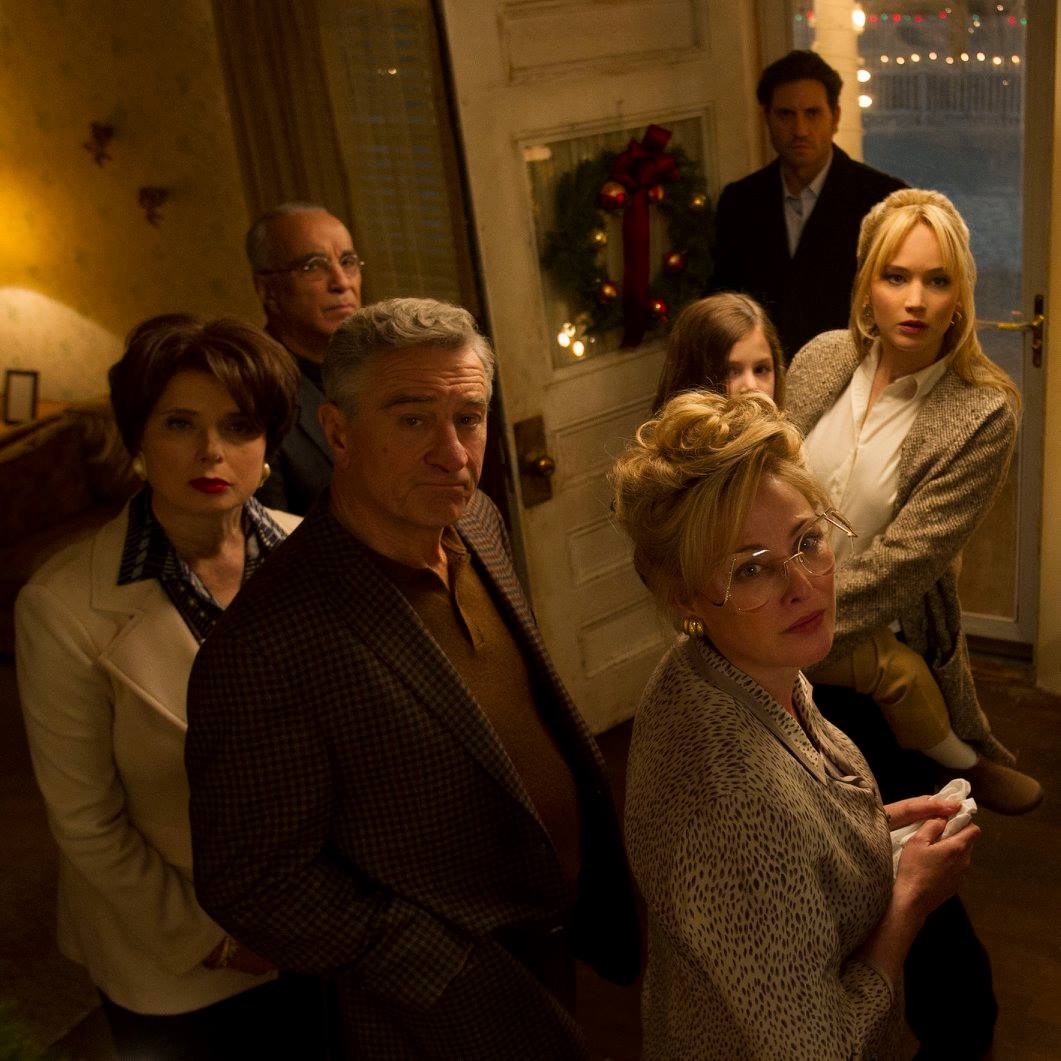
Director: David O. Russell/Starring: Jennifer Lawrence, Bradley Cooper, Robert De Niro, Virginia Madsen, Edgar Ramirez, Isabella Rossellini, Diane Ladd and Elizabeth Rohm

Jennifer Lawrence gave us not one but two strong characters in 2015; one of course was Katniss Everdeen, while the other is from David O. Russell's late year release, Joy. Katniss was always the reluctant leader and hero of her story while Lawrence's new character; Joy Mangano, is hardly shy about asserting her authority. Both women epitomize female empowerment but though Katniss is a terrific fictional character, Joy is based on the real life inventor/entrepreneur who overcame considerable resistance to realize her dreams and ambitions.

But don't mistake Russell's film for an uplifting, sentimental, Horatio Alger story. Joy is a beautifully-acted, powerful drama with its share of triumphant moments. The film's brilliant focal point is Jennifer Lawrence's marvelous performance. Lawrence is quickly laying claim to the title of America's best actress.

Based on the real life experiences of Joy Mangano, Russell's film opens in late 70s' New York. We see Joy struggle to support her mother Terry (Virginia Madsen), her ex-husband Tony (Edgar Ramirez) and two children. While Terry does little all day but watch soap operas, Tony clings to a fading dream of becoming a singer. In spite of their divorce, Joy tolerates Tony's presence in her house; an issue that irks her father Rudy (Robert De Niro). While Terry and Tony do little to help financially, Joy finds it necessary to take on all tasks and chores related to her house; including home repairs and maintenance.

Long divorced from Joy's mother, Rudy meets Trudy (Isabella Rossellini); an Italian woman who has just inherited her late husband's fortune.

Demonstrating an innate flair for invention, Joy designs a self-wringing mop which she draws up--utilizing her daughter's crayon--in a primitive sketch. Having parts crafted from her design by some of her father's shop workers, Joy is able to create a working prototype but lacks the capital to proceed with production. Tapping into Trudy's inheritance, she is able to hire workers to assemble the various parts in mass quantity.

Before she can patent her invention, Trudy recommends Joy consult a lawyer of her acquaintance to investigate the possible existence of a similar invention elsewhere--which elicits a warning from Tony, who thinks it a mistake to involve someone who doesn't specialize in patent law. The lawyer informs Joy that a similar patent does indeed exist, which makes royalty payments necessary. Joy then hires a company used by her co-patent holder to manufacture the parts she needs for her mops.

Joy's workers create a stock of mops but she discovers that generating interest in her invention is exceedingly difficult. An impromptu demonstration in a K-Mart parking lot draws few buyers and worse still, the store management has the police force her from the premises but not before confiscating her mops.

Having taken out a mortgage to pay her workforce, Joy's debts begin to accumulate but an opportunity to bring her mops to the public's attention is made possible by Tony, who for once manages to be useful to his ex-wife. Tony arranges a meeting for Joy with Neil Walker (Bradley Cooper); an executive for QVC; the home-shopping network, at their company headquarters and studios in Pennsylvania. The meeting goes swimmingly; as Walker is impressed not only with Joy's invention, but her gumption. After Joy's awkward demonstration before QVC personnel, Walker agrees to have her mop on a QVC broadcast. But when the product goes live, she discovers to her horror that the man chosen to present the mop on air bungles the demonstration, which results in zero sales. Furious, Joy drives to Pennsylvania, where she barges into a QVC executive meeting to confront Walker. She demands that her mop be given a second demonstration, performed by herself. Walker reluctantly agrees.

After some cosmetic and sartorial preparation--Joy rejects the latter for her own choice of on-screen attire, she goes live on QVC. She stammers at first but then eases into the demonstration. Moments later, the sales display lights up, causing Joy's family and friends watching at home to rejoice. The joyous, heady moment is a wonderful moment in the film.

But still more setbacks await when Joy discovers her half-sister Peggy (Elizabeth Rohm) has conducted business with the company manufacturing the mop parts, making payments to offset rising interest costs. Joy angrily tells her sister to never conduct business on her behalf again.

The various relationships in Joy's life have some effect, negative or positive on Joy's ambitions. While Peggy proves to be a sibling competitor with ambitions of her own, Terry is a constant burden and Tony a vexing impediment to her success until he proves otherwise. The one anchor in her life is her grandmother Mimi (Diane Ladd--where has she been?); a motivating influence whose unshakable faith in Joy remains a constant to her grave. And though Rudy is initially encouraging, he shows his true colors after Joy is forced into bankruptcy when she discovers the mop part manufacturer refuses to pay for its shoddy work; a problem exacerbated by their unlawful appropriation of her molds. In a moment that calls for fatherly support, Rudy instead expresses his regrets about ever encouraging Joy.

Faced with almost certain defeat, Joy summons her natural smarts and tenacity to look further into the patent claims by the rival company. To her dismay and delight, Joy discovers that no competing patent was ever filed which prompts a meeting with the man who made a competing claim on the patent. The scene where Joy confronts the man responsible for said fraudulent patent claim is riveting. Attending the meeting with confidence and resolve--and a dramatic hair self-styling, Joy secures from the man a sizable payment for the crime committed on herself and company.

The story ends happily for Joy, though subtitles tell us members of her family saw fit to sue her for various reasons. The final scene where Joy sits at desk, listening to a prospective female inventor pitch a product brings the story full circle and is a touching end to a powerful film.

David O. Russell is an actor's director. Though plot is never an afterthought in his films; people are always Russell's main concern. Supporting Lawrence's superb performance is Robert De Niro, who has done his best work in recent years under Russell. The same can almost be said for Bradley Cooper, who never hits a false note. It was great to see Rossellini, Madsen and Diane Ladd, who all made their presence felt. Edgar Ramirez probably redeems himself for the unfortunate Point Break remake.

Russell's film could serve as a metaphor for the plight of actresses in Hollywood; who, in their struggles to be cast in choice roles, always run into a near impenetrable wall of male power that seeks to diminish them rather than allow their talent to flourish.
What the movie ultimately celebrates is female empowerment; Joy's persistence in the face of resistance. The shot of Joy walking toward the camera; looking bad-ass in sunglasses and leather jacket, tells us everything about her refusal to be anyone's fool or doormat.

Russell's film is well on its way to the award empyrean but awards really mean little in the broader scheme of things. What really counts most is a film's endurance. I hope the film resonates with movie audiences.

Saturday, January 2, 2016

The Hateful Eight


**Spoiler Alert**

Director: Quentin Tarantino/Starring: Samuel L. Jackson, Kurt Russell, Jennifer Jason Leigh, Michael Madsen, Bruce Dern, Tim Roth, Walton Goggins, Demian Bichir and Zoe Bell

Happy New Year folks! And what a way to cross the threshold into another 365 with Quentin Tarantino's new film The Hateful Eight. The release of any Tarantino film is always a much-anticipated event. Tarantino's films guarantee a good time and his new western is anything but a snoozer.
It's axiomatic that westerns, particularly Sergio Leone's variety, occupy a prominent place in Tarantino's movie pantheon. Even his crime films contain allusions to Spaghetti westerns. Though his new film doesn't feel entirely like a Spaghetti, it nevertheless nods in that direction at times. The most conspicuous connection to the Italian westerns is in the soundtrack; an exceptional score by the man who helped make that western subgenre famous; Ennio Morricone.

Things we can expect from every Tarantino film are: colorful characters, colorful dialogue, violence; often times very graphic and his penchant for showing a sequence of events from different perspectives. And none of these indispensable Tarantino elements are crafted without his keen intelligence, which help mold these disparate features into something compellingly cohesive.

Subtitles tell us The Hateful Eight is Tarantino's eighth film, which is followed by a seque to a shot fit for the 70mm format proudly advertised in trailers: the white, wintry mountains of Wyoming (Colorado in actuality). In long shot, moving against the inert, silent surroundings is a stagecoach struggling through the deep snow.

Up close, we see the coach stop for a black man blocking the road who stands near several bodies, piled high. When the coachman stops the coach, the black man asks if he might ride along. The coachman tells him only the man who has hired the coach can decide. When the coachman turns to shout toward the interior of the coach, a heavily mustachioed man sticks his head out and inquires about the identity of the prospective rider. He makes the black man, who introduces himself as Major Marquis Warren (Samuel L. Jackson), walk slowly to the side of the coach but not before asking him to lay his his pistols down on a rock. Warren explains to the man, who introduces himself as John Ruth (Kurt Russell), that he has bodies he intends to collect a bounty on and is in need of a ride. Ruth tells Warren, in a forceful manner, that he intends to take the woman sitting in the carriage; Daisy Domergue (an excellent Jennifer Jason Leigh) to Red Rock to hang and isn't partial to having company along. The sight of Daisy's face; ragged and black-eyed, isn't mitigated by her gruff manner, which she extends to Warren in the form of racist comments. After further cajoling, Warren convinces Ruth to allow he and his bounty bodies a ride to Red Rock.

Along the way, Ruth and Warren get better acquainted; having met casually once before in the past. In their conversation, which is tinged with mutual suspicion and distrust, Warren tells Daisy about Ruth's reputation for bringing captives to hang, thus earning him the nickname John "The Hangman" Ruth. Warren's past is also revealed when we learn about his role as officer for the Union in the Civil War. Their conversation moves along and is only disturbed periodically by Daisy's comments, which elicit Ruth's violent responses; one being a hard elbow to the nose. Though she is slated to hang, we don't learn of Daisy's crime until the latter part of the film though we know murder is involved; which seems likely, given her rough appearance and rougher tongue.

In their ride through the Wyoming snow, they see a man waving to them from a distance who is also in need of a ride. Ruth is immediately suspicious; believing the man to be a secret associate of Warren's but changes his mind when they make his acquaintance. The man, with whom Ruth is more than familiar, is Chris Mannix (Walton Goggins), who explains that he is en route to Red Rock where he is to become the sheriff. Ruth scoffs at the claim; explaining to Daisy and Warren that Mannix belonged to a Confederate guerrilla party whose airs of legitimacy were challenged by those who say the unit were no more than marauders. While Ruth eyes Mannix suspiciously, the would-be sheriff rankles Warren with his southern, racist comments.

After reluctantly taking on Mannix, the blizzard worsens until the group is forced to stop at a place called Minnie's Haberdashery; a lonely establishment serving as a kind of outpost.

Upon entering we see the name of the establishment is kind of a joke, as no haberdashery is anywhere to be seen; only what looks to be a crude version of a country inn. Seated in the establishment are a few men who are scattered about the place. The ferocious, cold winds makes it necessary for the occupants to nail small, wooden planks on the door to keep the door from bursting open. The fact that everyone entering the haberdashery must first bust open the door then nail planks to keep the door from opening becomes a running gag throughout the film.

As Warren, Ruth, Mannix and Daisy become situated, they (and we) meet the mysterious gathering who have also become thwarted by the storm:

• Bob (Demian Bichir); Minnie's Mexican employee, who informs the arrivals his boss has gone away on business; a statement Ruth finds more than a little suspect.
• Oswaldo Mobray (Tim Roth); an English executioner, who is to serve at Daisy's hanging.
• General Sandy Smithers (Bruce Dern); a former officer for the Confederacy, who looks upon Warren and his Union blue with disgust.
• Joe Gage (Michael Madsen); a cow puncher who is as dubious everyone else.

Held captive by the weather, animosities emerge, such as that between Warren and Smithers, which eventually escalates into violence. Smithers finds an ally in Mannix, whose esteem of the officer reaches obsequious proportions.

Unsure of the other lodgers, Ruth investigates the identities of those already in the Haberdashery. And not long after Ruth begins to suspect that one or more of the lodgers are in cahoots with Daisy, which only intensifies his distrust of all present.The film then becomes a mixed-genre of western and mystery as the riddle of who might be Daisy's collaborators becomes the narrative focus. A killer locked in a sealed room with other people is a well-worn plot device peculiar to mystery novels, but it works well here. Tarantino is a master at drawing tension and drama from such situations as he did in Reservoir Dogs, where a near-empty warehouse becomes a stage in which criminals try to identify the cop in their gang.

After Warren's showdown with Smithers, we learn the coffee has been poisoned, which claims the lives of two characters. Who the culprit might be becomes the mystery within the mystery and as we draw closer to learning the identities of those who might be Daisy's accomplices, the film becomes more violent and bloody. Later, another character emerges at which point all mysteries unravel and a savage climax is ushered into the narrative.

Very few directors can keep a 168 minute film enthralling. Tarantino seems to have few difficulties accomplishing this feat. How he manages this is yet another mystery, though the answer seems deceptively simple. Considering most of the film is dialogue and exposition, one might think the story would become monotonous but in Tarantino's hands I found my attention fully engaged.

The beautiful exterior shots of a pristine, white snowscape stand as a terrific contrast to the Haberdashery interior; particularly later, when blood seems to splash over all the characters and nearly every surface. Tarantino's long-time cinematographer; Robert Richardson, does his profession proud with the 70mm palette he is given to work with.

Ennio Morricone's scores are always memorable; his music here is no exception. At 87, his compositions show no sign of becoming stale.

Jennifer Jason Leigh doesn't have much dialogue but she manages to be a forceful presence, nevertheless. The sight of her bloodied, maniacal face is one of the more memorable images from the film. Samuel L. Jackson, the real scene stealer of Pulp Fiction (not Travolta), commands our attention early and holds it.

Tarantino says he will retire after his tenth film. After seeing The Hateful Eight, I felt his retirement target to be premature. I hope he reconsiders. His new film demonstrates his edginess is still intact and robust.
Tarantino would have been a great playwright. What is an essentially a chamber piece feels like a really exciting play.
His film is one of the last significant movie releases of 2015. It is a helluva way to end the year and an exceptional film to have as a first blog-post for 2016.