Showing posts with label Melissa Benoist. Show all posts

Thursday, April 16, 2015

The Longest Ride


**Spoiler Alert**

Director: George Tilman Jr./Starring: Scott Eastwood, Britt Robertson, Alan Alda, Melissa Benoist, Oona Chaplain, Jack Huston and Lolita Davidovitch

In this blog, I generally avoid bashing any film adapted from a Nicholas Sparks novel because I liken the experience to bullying a nun; it provides little challenge and it may be perceived as mean-spirited. But I couldn't grant George Tilman Jr.'s The Longest Ride free passage. I figured I'd let too many other Sparks adaptations escape ridicule and critical evisceration because, well...they're nuns.

I always feel sorry for any cast in a movie inspired by a Sparks novel. They have to utter shockingly bad dialogue and pretend the stories actually have conflict.

As most frequent movie-goers are aware by now, Hollywood has been desperate to reproduce The Notebook, though it is unconcerned how unapologetically formulaic and aggressively insipid other iterations may be. The Longest Ride (which feels like one), didn't really bore me; it made me laugh often, though it isn't a comedy. I tried hard to suppress giggles and keep my face-palms to a bare minimum but the movie was unaccommodating.

Let's face it, if you've seen The Notebook, you've seen George Tilman Jr.'s flick. It merely replaces Ryan Gosling and Rachel McAdams with Scott Eastwood and Britt "No, I'm not Jennifer Lawrence" Robertson and James Garner and Gena Rowlands with Alan Alda and well, nobody. Same story but with a few tweaks to make it appear it's a different movie.

In this "version", Scott Eastwood (bearing a scary resemblance to his old man) plays Luke Collins (the name couldn't be more Cowboy); a competitive bull-rider in the North Carolina rodeo circuit. Eastwood makes a very convincing rodeo competitor (come to think of it, Clint would have made one too, in his day) and is an ideal Sparks stud; tall, muscular, tough and always laconic.

During one of his competitions, a Wake Forest University sorority girl named Sophia Danko (Britt Robertson) is prodded to the rodeo by a gaggle of her sisters. After they watch Luke execute a successful ride, his hat escapes the ring and comes to rest near Sophia. He asks her to keep it, while she and her friends dreamily ogle the charismatic, young man.

At a local watering hole that evening, the two meet, and agree to a date. Sophia warns Luke her she is to begin an internship at a Manhattan art gallery soon, which may preempt their romance.

And what Nicholas Sparks story would be complete without an elderly person pining for a lost love, one forged in the distant past. That person is Ira Levinson (Alan Alda), a widower who spends his days missing his wife.

One night, while Luke and Sophia are driving home from a date, the two find Ira's car crashed into a tree. As Luke pulls Ira from the smoldering wreckage, Sophia retrieves a box resting in the front seat. Later, at the hospital, she discovers love letters Ira had once sent inside the box, which again, if you've seen The Notebook, you know where the story will lead.

We know Sophia will ask Ira about the letters and because his failing vision won't allow him access to the missives, she becomes his surrogate reader. And in reading them, we discover an old romance which, if you've seen other films of this ilk (and most people have), alerts us to how the story will be structured: Luke and Sophia's romance will play out against Ira's, which takes us back to the early 1940s', when he worked in his family's clothing store. A young woman named Ruth (Oona Chaplain); a newly arrived Austrian Jew who, with her mother and father, narrowly escaped the Nazis, wanders into the Levinson store. Young Ira (Jack Huston) sees Ruth and is instantly smitten. The two meet and before long the two become an item. After some heady dates and time together, their relationship is tested when Ira is drafted into the army.

I have to say the battle scenes, particularly one in which we watch Ira bravely rescue a comrade from no man's land are so visually uninspired they couldn't have passed muster on Hogan's Heroes. But that is an unfair knock; young girls and women who will make up the majority of the audience for the film can't be expected to care about Saving Private Ryan realism.

Knowing Luke's passion for bull-riding and Sophia's for art, how long do you think it will take for their respective worlds to clash? And is it any surprise that Luke's mom, Kate (Lolita Davidovitch, in a wisp of a character) pleas with her son to stop bull-riding, fearing something catastrophic? And is it any surprise that Sophia begins to hector him the same way, which elicits a response we heard coming from the opening credits: "I don't know how to do anything else."

If my feet weren't stuck in the molasses of Luke and Ruth's relationship, I was too busy chuckling at Ira and Ruth. I tried to ignore Oona Chaplain's (granddaughter of Charlie Chaplain) Austrian accent, which was as wide as the Danube. When she wasn't slinging her accent around, she was saying peculiar things. For instance, while gamboling along a North Carolina shore with Ira, Ruth exclaims ecstatically, "This is beginning to remind me of home." Strange thing to say, considering home meant fleeing the Nazis. And if running along a beach reminds her of home, what Austrian beach might she be missing exactly? Does the Danube have sandy shores I'm unaware of?

I can't imagine the American south was a Norman Rockwell halcyon in the 1940s as it's depicted in the film. No anti-Semitism anywhere?

The connective tissue between the couples of the past and present is art. Ruth and Sophia are both art lovers and a collection Ruth and Ira amass will figure prominently in the present.

It was darn tough to find anything in the film resembling conflict. Sure, Luke's bull-riding is an issue as is Ruth and Ira's inability to have children (Ira is wounded during the war, rendering him sterile). Their attempt to play parents to one of her students, whose home-life is a sad tale of neglect, comes closest to anything resembling sturm and drang. What real drama there is is so mild and tension-free the characters may as well be troubled by bad tummy aches and paper-cuts.

Tilman, who has done some fine work behind the camera (Notorious), is hamstrung with what is a typical Nicholas Sparks story. Even the visuals are stifled. It isn't surprising to see so many aerial tracking shots of the North Carolina country-side; they seem to be a fixture in most of these movies.

Aside from serviceable dialogue that hobbles the performances, there isn't a convincing exchange between any actors the film entire. Poor Melissa Benoist had to make her way through Danny Collins, only to end up in The Longest Ride, where the dialogue has scarcely improved.

Scott Eastwood certainly inherited his father's charisma (and a more rugged physique) but can't bring anything interesting to the role though he and the cast can't be blamed, the script must have read like a car maintenance manual.

The ending is an eye-roller and a major hoot. After Ira kicks the bucket, his and Ruth's substantially valuable art collection is willed to Luke and Sophia with an improbable proviso that brings a sappy two hours to a merciful close.

I highly recommend the film to women (or men) who might find the sight of Scott Eastwood's Adonis-like body worth a gander. Unfortunately for men (for these films are made mostly for women), Britt Robertson provides some but not much distraction from the silly drama playing out onscreen. Or if the sight of a doddering, sickly Alan Alda flicks your switch, then knock yourself out. Otherwise, there is little reason to see The Longest Ride.

I'm sure the next Nicholas Sparks adaptation is but a year away. I'm aquiver with anticipation.

Monday, April 13, 2015

Danny Collins


**Spoiler Alert**

Director: Dan Fogelman/Starring: Al Pacino, Christopher Plummer, Annette Bening, Bobby Canavale, Jennifer Garner, Melissa Benoist and Josh Peck

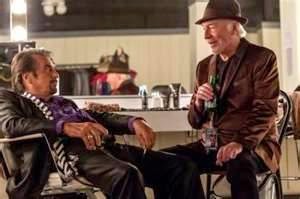
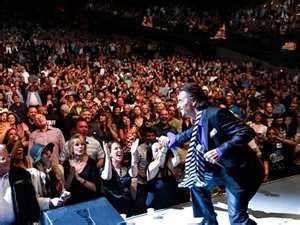
How convincing one finds first-time director Dan Fogelman's Danny Collins depends mostly on how convincing one finds Al Pacino as an aging rock star. Before I saw the film I found the idea hard to swallow but after watching Pacino trying to execute rock star moves onstage and grumble his way through songs, the notion rocketed past ludicrous. It might not be an issue if the rest of the film weren't an indigestible, viscous soup of cliches and hooey. Though Pacino certainly has nothing to prove as an actor, one could understand the excitement he must have felt in taking on a role unlike anything in his resume. But he should have known better; he isn't remotely right for the part; though he made an earnest attempt.

There isn't much we haven't seen in any film about an aging rock star who contends with age, creative impotence and an incorrigible substance abuse habit. It also isn't surprising to see the movie rock star keeping company with his long time manager, whose other unofficial roles include friend and therapist. Pacino plays the title role while Christopher Plummer (also in an unusual role) plays his manager, Frank Grubman.

We see Danny, on the verge of mega-stardom, being interviewed by a Rolling Stone-like reporter in the early 70s'. Unbeknownst to Danny, a quoted comment draws the attention of no less than John Lennon. A letter from Lennon that addresses Danny's comment never reaches him. In an early scene in the film, in present day, Grubman presents Danny with the letter he should have received decades earlier and explains how he acquired it. The message in the letter is friendly and motivational. The long, lost missive is supposed to serve as a source of regret for Danny, as he believes Lennon's kind words may have changed his perspective on his career and life. And though the letter is supposed to loom large, it makes little sense. That the letter could have had, given Danny's success and iconic, rock star status, life and career-changing implications seems a little strange to me.

Fogelman's script doesn't really mine anything profound from the life-changing letter idea. Sure, it means a lot to Danny, as it would most musicians but what exactly does it mean?

But the film has other problems...

One is Danny's search for his long, lost son, Tom Donnelly (Bobby Canavale), who (surprise) wants nothing to do with his father or his rock star life. Danny's absence from Tom's life and the anger and resentment it engendered is such a tired plot development. When Danny finds Tom and shows up at his door unannounced and uninvited, we know precisely what will be said in the first exchange between the two. Can you guess? You might take a stab by predicting Tom will ask Danny: What the hell are you doing here? followed by an angry directive demanding his father leave the house. Then you might also guess Danny will respond by uttering something like I just want to be part of my grandchild's life or a hackneyed equivalent we can easily anticipate.

Tom grudgingly allows Danny to pay tuition for a special school for his daughter, who shows signs of ADHD. Danny uses his rock star aura to charm a school official into waving the rigorous admission application process and overlooking the epic waiting list. Tom begins to warm to his father, especially after Danny learns his son has leukemia. Naturally Danny assumes the cost of treatment and promises to be by Tom's side as he undergoes a life-threatening ordeal. Father finds long-lost son, learns he has lethal disease; Hallmark Classics, here we come.

But Danny contends with other issues in his life and career. He hasn't recorded a song in thirty years but has taken steps to write new material, which he tries on a manager in a hotel where he has taken up long-term residence. The woman, Mary Sinclair (Annette Bening), who looks like a sexy librarian, is hardly impressed with Danny's celebrity credentials or music. She also rejects his numerous attempts to take her to dinner. But like Tom, she too begins to succumb to Danny's charms. Gee, didn't see that coming.

An uninteresting and unnecessary sub-plot involving Danny playing matchmaker to two young hotel employees takes up more of the film's running time.

I was troubled by Danny's supposed rock-star attire. Rather than looking hip in classic rock couture; a get-up of leather jacket, t-shirt and jeans, or some such sartorial trappings, we see Pacino in Barry Manilow-esque duds that are more than just a little embarrassing. His appearance is more Mel Torme than legendary rocker. Needless to say it was quite distracting and unintentionally comical. It is necessary to note that Mary Sinclair's plain, managerial outfit posed a direct threat to Danny's suits in the cool category. That's not good.

Before long, we learn from Grubman that Danny's finances aren't what the star believed them to be. This disclosure comes on the heels of Danny's decision to cancel his tour.

Danny's attempt to woo the attractive hotel manager, the resurrection of his songwriting and his pleas to be allowed into his son's life are narrative threads that never come together in any meaningful way or in any way that is remotely dramatic. Even a scene where Danny sets up a concert date at a small venue to try new material before losing his nerve and falling back on his standards just seems like the story going through the motions.

If you were one of those individuals who thought life would be unbearable if you never heard Al Pacino sing, the chance of a lifetime awaits you in Fogelman's film. One can give Pacino credit for trying but if his character actually made a career singing what one hears onscreen, one might vow to never ridicule Hall and Oates again.

The cast must have signed on to this mess, script unseen, after learning of Pacino's commitment, because every character is so stock we know them before they utter a word.

I did like the soundtrack, which consisted solely of John Lennon standards, but Danny's music suffers in comparison and does little to serve the illusion of Pacino as rock star. Hearing Lennon made me want to hear Lennon, not Danny Collins.

I might normally dissuade someone from seeing the film but the name cast might be worth one's time. It almost was for me. Knowing where the story was headed, I began to daydream before the sandman almost claimed my attention.

See Danny Collins, if you dare. Or if you crave Pacino's song-stylings.

Tuesday, November 11, 2014

Whiplash


**Spoiler Alert**

Director: Damien Chazelle/Starring: J.K. Simmons, Miles Teller, Paul Reiser and Melissa Benoist

The drive to be great; to overcome discouragement and self-criticism, as well as the criticism of others, might also be a lonely, solitary pursuit. But in director Damien Chazelle's Whiplash, the call to greatness might also mean having to overcome a mentor's furious, almost unscalable standards.

The story seems simple: a young student named Andrew Neyman (Miles Teller), studying jazz drumming at a prestigious music school in New York City, encounters a teacher named Terence Fletcher (J.K. Simmons), whose tough reputation is enough to make any prospective musician quake with fear and anxiety. But as the story unfolds, we see that the psychological pugilism between student and instructor is anything but simple.

Andrew is determined to be one of the greats; his bedroom wall photograph of jazz great Buddy Rich reflects his lofty ambitions. His love for jazz and his knowledge of the genre is extensive. On a first date with a young woman named Nicole (Melissa Benoist), he is able to identify the obscure jazz music playing in the background in his favorite pizza place.

Andrew makes it clear to Nicole and to everyone else his intentions to be one of the greats; even if it means being in exile from meaningful relationships.

When Andrew first encounters Fletcher, the young student is playing a drum-kit inside an empty room at the school. Fletcher hears him, then watches for a few seconds before Andrew notices the teacher and stops. Fletcher encourages him to play and when Andrew stops again, he notices the teacher is gone. The exchange, though seemingly innocuous, carries a whiff of foreboding.

After Fletcher steps into class to relieve a fellow instructor, he notices Andrew. Fletcher offers him fulsome praise by announcing to the gathering, "we have another Buddy Rich here," then invites him to join his advanced class the next day. Andrew is further encouraged by an exchange he has with Fletcher outside class when the instructor tells him in an amicable, benign way to have fun and relax. Feeling the flush of Fletcher's avuncular urgings, he joins the class in playing a jazz piece called Whiplash. But after a few stops, where Fletcher warmly chides Andrew for "rushing" his part, he stops, lifts a drum cymbal and hurls it at the young man's head, the young drummer manages to dodge it just in time. The stunned Andrew gapes at Fletcher as the enraged instructor shouts "Were you rushing or were you dragging?" Which is followed by a verbally abusive stream of threats and insults Andrew is ill-prepared to hear. The attack elicits a tear, which Fletcher seizes upon to offer more humiliating words. The abuse extends to the rest of the class in the form of homophobic slurs and homoerotic comments. Fletcher's vocal assault immediately called to mind R. Lee Ermey's rants in Full Metal Jacket for obscene intensity and psychological brutality.

As Fletcher's class prepares for a competition, his abuse withers the class into silence and anxiety and though Andrew receives his lion's share of the physical and mental venom, his tenacity to be great remains. His vigorous practice sessions leave his fingers, hands and drum snare bloody and puddled with sweat.

Andrew's drive to be exceptional takes its toll on his relationships. He tells Nicole his time with her is interfering with his musical pursuit while he vexes his cousins with his dismissive, pointed comments about what he feels are their mediocre, academic accomplishments.

When the jazz class is set to perform at another competition, Andrew is left to his own devices to secure transportation to the gig, which he resolves by renting a car. While recklessly speeding to the performance, his car is violently blindsided by a truck and rather than await medical care, he races to the hall, bloodied and ragged. He manages to arrive on time, but barely, much to Fletcher's exasperation and to the shock and dismay of his fellow musicians. The scene effectively conveys his manic drive and stoic intensity.

Fletcher's abuse continues, which leads to Andrew's self-dismissal from school and abandonment of his dream. Fletcher's classroom methods come to the attention of investigators, who prod a reluctant Andrew into making a damning statement against his former instructor. The investigation comes on the heels of the suicide of one of Fletcher's former students, who was apparently victimized and driven to the act while under his tutelage.

The final encounter between Fletcher and Andrew comes after a chance meeting on the street, where the resentful teacher and his former student share a drink. Fletcher invites Andrew to join his jazz band for a performance at a jazz festival; an event that brings their relationship to a head and tests the young musician's creative resolve.

J.K. Simmons, who is widely known as a character actor, is given his first chance to co-shoulder a film and he doesn't fritter the opportunity. Fletcher is a volatile nightmare, with his furious temper and unconscionable aggression. Simmons doesn't depict him as something otherworldly and malign, but someone human. His motivations seem very reasonable and sensible when he isn't hissing and baring fangs inside the classroom. Simmons always had range and depth, which he is finally able to demonstrate here.

Simmons's performance would be a soliloquy in an echo chamber if he didn't have Miles Teller to play off. Andrew could have been a self-pitying, doughy victim but Teller finds the fascinating nuance in the character; his prickly regard for his peers, his monomaniacal pursuit of his goal and his abrupt dismissal of everything that isn't drumming, evinced in his callous break-up with Nicole; a mistake he is later unable to correct.

Simmons' muscly biceps, bald head and intense brow make him an interesting physical adversary to Miles Teller; whose baby fat face and innocent, school boy eyes make for a visually arresting contrast.

But though Simmons and Teller mesmerize, the film has its glaring flaws. That Chazelle expects us to believe a professor's abusive classroom behavior would go unreported and unnoticed for so long is a bit much to ignore. But even if we overlook such literalism, that which is the film's strength is also the source of its greatest handicap. Though Simmons and Teller perform the hell out of Chazelle's script, so much of the drama is over-the-top and overly stylized. The R. Lee Ermey evocation bothered me too. What makes sense on Marine base seems comically hyperbolic in a classroom. I guess Chazelle wants Fletcher's story about a cymbal thrown at Charley Parker to make his behavior seem plausible and justified. Maybe it does but the film lacks subtlety. The violent, in-your-face-screaming robs the film of its psychological tension. In The Paper Chase, John Houseman's Charles W. Kingsfield manages to frighten and intimidate a classroom (and the audience) with his unnerving wit and intellect and his ability to wreck his Harvard student's self-esteem with the merest barb or insult. Fletcher's verbal bludgeoning is hard to take seriously after awhile and even in its most frightening moments, it's distractingly absurd.

I also found the blood and sweat more stylistic excess. I realize Chazelle wants to convey the violence and passion of creative expression, but the sight of so much blood and the deluge of sweat overstates and overpowers his message.

I think Whiplash is a terrific performance film, but as a whole, it doesn't work for me. It trips over its own ferocity. Even so, I would still encourage others to see it. It has some fascinating attributes. Teller's technical mastery of the drums is one such strength. Chazelle's film is hardly dull or silly; it has an energy surplus.

The cure for what ails Whiplash can be expressed concisely: more psychology, less psycho.