Monday, November 16, 2015

Spotlight


**Spoiler Alert**

Director: Tom McCarthy/Starring: Michael Keaton, Liev Schreiber, Mark Ruffalo, Rachel McAdams, John Slattery, Brian d'Arcy James, Stanley Tucci, Jamey Sheridan and Billy Crudup

Two films on journalism are currently making the rounds of theaters; The Truth and Spotlight. Both tell stories based on actual events but of the two, it is safe to say the latter is the superior. While the former flounders in liberal sanctimony, the latter is tougher and ultimately more disquieting. The former makes the filthier aspects of journalism look glamorous with Cate Blanchett and Robert Redford in the leads while the latter is grittier and glamor-free.

Based on the Boston Globe's investigation into pedophilia in the Catholic Church, Spotlight tells the story of how the newspaper's crack reporting team; known as Spotlight, uncovered the Catholic church's efforts to bury evidence condemning more than 90 clergymen in the Boston area. We are reminded how daunting the investigation must have been in a city that is 53% Catholic and in thrall to men of the cloth. Pursuing the story means, as several Boston Globe personnel are quick to point out to the newly-arrived editor Marty Baron (Liev Schreiber), suing the Church. Baron learns how daunting the idea of taking on a monolithic institution with impressive and near-infinite resources can be when he assigns the Spotlight team; lead by Walter "Robby" Robertson (Michael Keaton) to research the story. Robertson's staff of veteran reporters; Mike Rezendes (Mark Ruffalo), Sacha Pfeiffer (Rachel McAdams) and Matt Carroll (Brian d'Arcy James) express surprise when given their new assignment; knowing former attempts to break the story of pedophiliac clergy were previously suppressed.

As Robertson and his staff chase down leads and interview victims, the effort to gain access to public files on cases against the Catholic Church is thwarted not only by the church itself, but the legal system, which becomes a collusive agent. But Spotlight learns of other lawyers who have filed cases or have pending cases against the church. One such lawyer: Mitchell Garabedian (Stanley Tucci), is at first reluctant to allow Spotlight to interview his clients but eventually cooperates. Another lawyer for a high-profile firm; Eric Macleish (Billy Crudup), has also tried cases against the church with mixed results but unlike Garabedian, he refuses to share any information on his cases. The way Macleish responds to Robertson's request for information tell us everything about the Catholic Church's extensive power and influence.

Those that share personal accounts of abuse with Spotlight reporters tell disturbing stories of being coerced by priests, who they held in reverence and awe, to perform sex acts on them, including fellatio and intercourse.

Spotlight also makes contact with a former victim; Phil Saviano (Neal Huff), who has since formed an organization to help victims and who becomes a key source in the investigation. Spotlight members encounter much resistance from parishioners, who find the idea of exposing priests and bishops unsavory.

We get a sense of the sickness that pervades the priestly ranks, which leaves one with a feeling of revulsion. In one disturbing scene, Sacha interviews a pedophile priest at his front door. We expect the priest to slam the door in her face but instead he is shockingly candid about what he did but more horrific is his lack of remorse or any acknowledgement of guilt. His mantra-like response to Sacha's questions about molesting kids is "Yes, but I didn't feel any gratification." The questions are brought to a halt by the priest's sister, who does slam the door. And though the Spotlight team makes progress in their interviews and fact-finding, Baron realizes the story will only make an impact if the they can prove the abuse was systemic, which means running afoul of Cardinal Law, the presiding church power. Doing so also means securing the files on cases against the church.

In a exciting sequence, Rezendes manages to gain access to the secret files but not without stiff resistance from a clerk who isn't sympathetic to the reporter's investigation.

What Spotlight accomplished is public record now, but seeing the story depicted in a movie gives one a sense of how determined the Catholic Church is/was to suppress its darkest, evil secrets. This is accomplished in part by excellent performances all around and intelligent, crisp dialogue that keeps one's ears engaged and mind alert. Michael Keaton proves his performance in Birdman is no fluke. His intense presence plays well against Schreiber's Marty Baron, whose reserve masks a penetrating intelligence. Mark Ruffalo is always terrific and Rachel McAdams, who has recently extricated herself from years of crappy romantic comedies, is also quite good.

The pace is fast but not frenetic though one is sure to confuse names and personalities in a film where facts and people quickly come and go.

Though director McCarthy's story is affectively told, somehow it failed to completely go for the throat. It is a terrific film and a stirring one, but it wasn't as dark as I had hoped it would be. This should in no way be read as a major criticism but maybe just personal taste. The Catholic Church has much to answer for in its history; the sexual abuse of children is only one example of its moral failings. The film's unflinching pursuit of one truth the Church would rather not acknowledge or pretend doesn't exist is commendable and brave, especially when one considers it may offend a certain movie-going demographic.

It is particularly sobering to see the staggering list of international cities where church members have reported abuse, which precedes the end credits. It is even more sobering to see one's home town on the list.

Spotlight is one of the significant films of the season. Whether it will be worth seeing again years hence or become a relic is for the future to determine. For now, it is a compelling drama with a big target.

Friday, November 13, 2015

45 Years


**Spoiler Alert**

Director: Andrew Haigh/Starring: Charlotte Rampling, Tom Courtenay, Geraldine James and Dolly Wells

An elderly British couple, living contentedly and happily in their rural home, are suddenly forced to confront a past that not only threatens their idyllic bliss, but their marriage as well. The husband; Geoff Mercer (Tom Courtenay) sits at their breakfast table, having just read a letter that has left him distraught. His wife; Kate Mercer, having just walked in from an invigorating stroll, finds her husband troubled. Responding to his wife's puzzlement, he says he has just been informed by the Swiss authorities that the body of his former girlfriend; a woman Geoff was involved with before his marriage to Kate, was found in the Swiss Alps; perfectly preserved in ice. Her death; the result of a hiking accident in 1965; occurred five years prior to his marriage to Kate.

Though Geoff downplays his relationship to the woman, we can see from Kate's reaction to the news that his former girlfriend is a source of anxiety and jealousy. How the news of Geoff's former girlfriend affects the Mercer's marriage is the subject of director Andrew Haigh's 45 Years, which is based on a short story by author David Constantine.

The story unfolds at a deliberate pace as Kate's suspicions of the girlfriend's significance in Geoff's life prompts closer scrutiny. Though the discovery of his ex-girlfriend's body causes him anxiety, his attempts to allay Kate's fears come to naught. The implications of the letter prompts many questions; the most pertinent being: was the girlfriend's death the only obstacle to a more serious relationship? Would Geoff have eventually broken off his relationship, irrespective of the fatal accident, or would he have married the woman? Has Kate and Geoff's time together; a mostly happy 45 years; been rendered meaningless by her suspicions about the other woman? Are any or all of Kate's grave concerns groundless? The questions themselves become a razor-sharp blades, whose painful cuts leave gaping, marital wounds.

Though the Mercer's marriage is of paramount concern, the film's point-of-view belongs to Kate. Her suspicions gain some legitimacy when she discovers photos in the attic that belie her husband's claims of innocence. Furtive investigations only strain the marriage further. It is interesting to note that the crisis occurs during plans for the couple's forthcoming anniversary party.

As doubt creeps into Kate's thought, becoming all-consuming, the anniversary party edges ever nearer. How will the party play out? Anytime a party or anniversary serves as a climactic moment in a film, we can expect a speech or incident at said event to assume narrative significance.

I anticipated Geoff's obligatory visit to the body at the beginning of the film but I'm glad that never happened. The very idea of an unseen, frozen body causing marital upheaval works extremely well as a metaphor and a plot device.

The film's time motif is an appropriate symbol. The past and present; particularly the former, weigh heavily on the couple; what might have been becomes almost unendurable speculation.

The final scene, which follows Geoff's anniversary speech, is followed by a turn on the dance floor, where Kate's reaction to her husband's rapturous cheer leaves little doubt to her state of mind.

And as much as the story belongs to Kate, the film is Charlotte Rampling's. So much of her performance plays out in her face; we see her inner turmoil and pain; her eyes registering so much anguish. She is quite marvelous (as one would expect of an actress of Rampling's caliber) but so is Tom Courtenay; who shows us that Geoff's subtle, inconsistent behavior betrays a more complicated personality.

The film's soundtrack is made up of the songs the couple have selected for their anniversary celebration and like the girlfriend who is locked in ice, the music is riveted to a particular period of the past. Not one contemporary song is heard in the celebration or the soundtrack. And if not for the current car models seen in the movie, one might feel the couple is suspended in an indeterminate time in the past; computers, cellphones and tablets are nowhere to be seen.

45 Years will be released next month. It is sure to get buried in the holiday, cinematic shock-wave, which is too bad. It is a film that isn't flashy or sensational, but quiet and darkly introspective.

The film is really about one character and her demon-haunted past. Andrew Haigh tells a story that is both touching and in a way; frightening. The possibility that one's seemingly happy life is no more than an illusion is explored with poignance and depth. That it denies us a happy denouement is a reflection of its grim view of the Mercer marriage and the unbearable truths that lie therein.

Tuesday, November 10, 2015

Al's Omniflick's Greatest Hits


I just wanted to take this blog-post moment to celebrate my 10,000th hit, which just arrived today. I want to thank everyone, in America and the world, who have taken the time to visit my modest little bit of cyber-real estate on the internet. The visits are very much appreciated.

Looking ahead, if you have a suggestion of what you might like to see on the blog, don't hesitate to leave a comment or contact me via e-mail, which is provided at the bottom of the screen.

Thank you all again for stopping in. Hope you all come back soon.

Your Pal, Al's Omniflick

Heart of a Dog


Director: Laurie Anderson

Musician Laurie Anderson returns to documentary film with Heart of a Dog; her poetic meditation on life, death, her dog Lolabelle and her mother. Her film isn't a documentary per se; it is more a stream of ruminations and observations about her life and sometimes the world. The film is like Anderson's music; offbeat, unpredictable and sometimes strange. Lovely images supplement her narration; which has a trance-like quality; she enunciates her words soothingly before they taper to a whispery end.

Anderson begins her film by telling us about a dream she had, which is recollected in animation. She is lying in a hospital bed when the doctor hands her a bundle we might think is a baby, only it isn't; it is her rat terrier Lolabelle. As if speaking to a human infant, Anderson tells the dog she will love it forever.

The fact that she introduces her dog is key. In her film, Lolabelle's perspective on the world is a source of fascination for Anderson. In relating Lolabelle's first encounter with birds of prey, who abort their attack when they see she is an unwieldy target, Anderson observes that her dog first became aware of the world above her. One can't help but think Anderson is commenting on human consciousness; our inability to be fully aware of another reality.

In between remembrances and observations; beautiful images, real and animated, play on the screen. Her thoughts take us different places. Cogitations on death give way to ideas about how language defines our reality, which is attended by a quote from Wittgenstein. Later Anderson reflects on her past when she tries to remember a moment when she felt her mother's unconditional love. The memory involves a harrowing incident where she very nearly caused her twin brother's drownings.

Another observation is about how soldiers suddenly became omnipresent in airports and public life after 9/11; a bewildering development that leads her to ask: "when did this happen?"
The death of a close friend and the subsequent sighting of his specter stimulates thoughts about ghosts. Anderson also shares a traumatic experience from her youth where, in showing off on a diving board, she inadvertently landed on concrete; breaking her back in the process. Told she would never walk again, she defied doctor's expectations, which leads to her to believe "adults didn't know what they were talking about."

A film like Heart of a Dog has an amorphous, narrative structure. The film goes where Anderson's mind takes her--and us--and it's a wonderful, dream-like journey.

Anderson wrote and directed the film but also provided the soundtrack, which serves the images well. I'm not entirely sure what Anderson wants us to take away from the film but for me her cerebral wanderings were enough. What I saw seemed like an essay with lyrical asides and abstract diversions. Such a film can hardly be everyone's cup of tea, but I enjoyed it and I appreciate her artistic objective. One might not expect a documentary that begins with a dream about a dog to go places Heart of a Dog goes, which is one of its wondrous surprises. In it, Anderson is a poet, a scientist, a musician, a philosopher and a dog-lover. How often does a filmmaker wear so many hats in one film?

Sunday, November 8, 2015

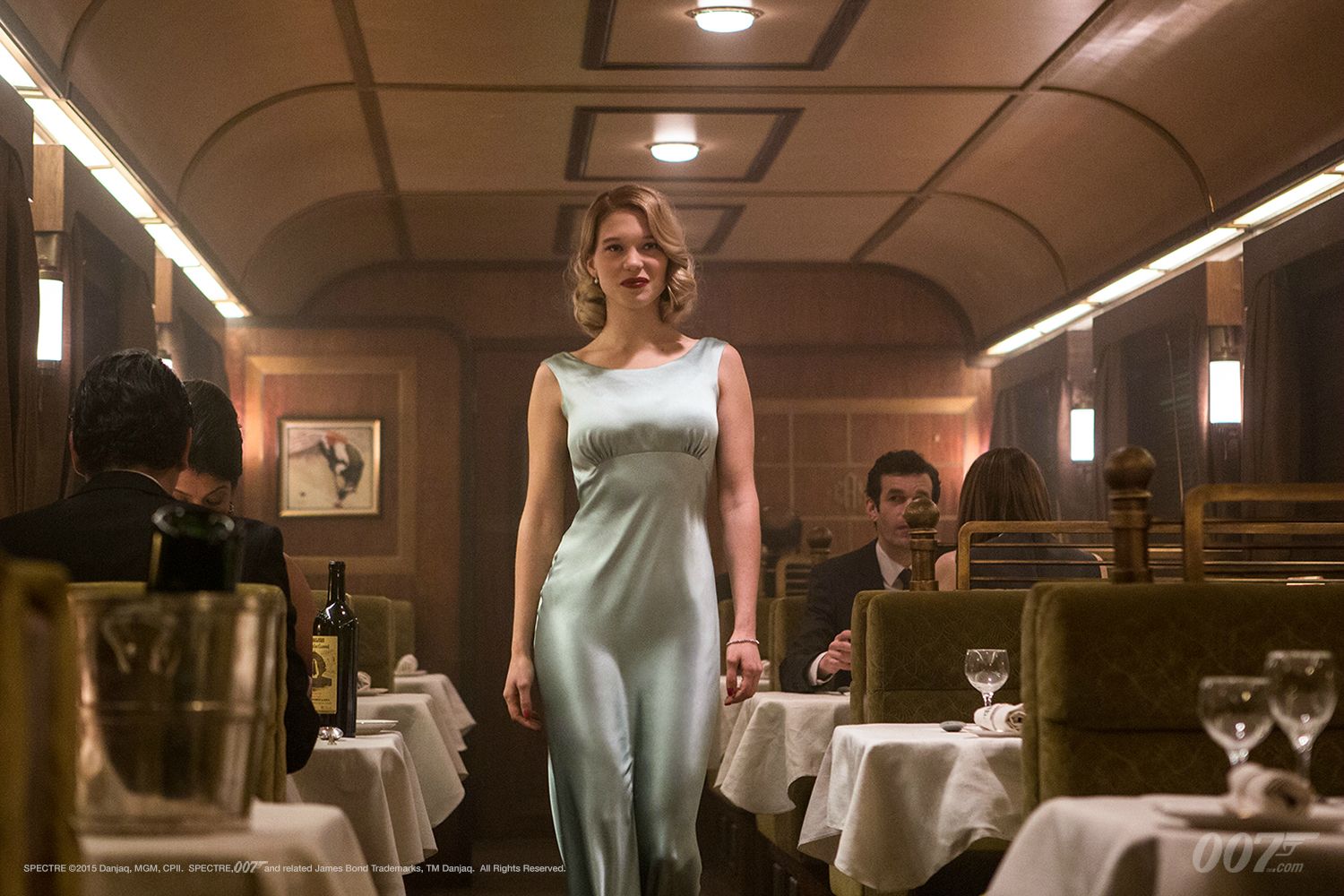
Spectre


**Spoiler Alert**

Director: Sam Mendes/Starring: Daniel Craig, Lea Seydoux, Christoph Waltz, Ralph Fiennes, Monica Bellucci, Ben Whishaw, Naomi Harris, Dave Bautista and Andrew Scott

What would the world do without 007? We would have suffered a great many disasters as a species if Mr. Shaken, Not Stirred weren't on the job. And where would movie audiences be without Bond movies to liven up multiplexes every few years? I suppose the world will never tire of James Bond, nor will I. No matter the cast, I can always find time to see the world's greatest spy onscreen. Director Sam Mendes has found himself a comfortable niche as a Bond-director and has done quite well. His latest is fun and very faithful to the series.

Spectre looks and feels like a Bond film and has terrific action sequences, so what more does one need? Do we need a director to reinvent the series; tinker with a formula Bond fans have come to expect and cherish? No. What do we ask of any Bond movie but action, cool cars, cooler gadgets, psychotic baddies, beautiful women and romantic locales? You get all that in the latest film and a fun villain in Oberhauser (the always entertaining Christoph Waltz) and some choice babes in Lucia (luscious Monica Bellucci) and Madeleine Swann (sexy Lea Seydoux). The latest film also attempts to tie all the Daniel Craig/Bond Films together in a story that links the various villains in a way Bond films never have.

Bond finds himself in hot water with M (Ralph Fiennes) and British intelligence after conducting a mission in Mexico without his superiors' consent or oversight. Grounded from duty, Bond learns the double-0 program may be scrapped by another intelligence agency run by a man referred to as C (Andrew Scott). Said agency's objective is to link with other intelligence-gathering organizations from around the world, thereby creating the ultimate surveillance network. Of course we know that anytime 007 is told the world no longer needs his kind, he is going to prove otherwise. Though M intends to keep Bond under watch and tethered to London, 007 has other plans.

Not long after, Bond finds himself in Austria visiting the shadowy personality known as Mr. White (Jesper Christensen); who we've seen in previous Bond films. Mr. White's link to various international crime syndicates includes one called Spectre, who Bond learns of after Q (Ben Whishaw) identifies a symbol found on a ring in White's possession. Bond manages to infiltrate a Spectre meeting in Rome; a secret society-like affair run by a man named Oberhauser. Well aware of 007's presence, Oberhauser's thugs set upon Bond, who manages to escape with the help of a sleek Aston Martin sports car, which was previously "borrowed" from Q's lab. The Aston Martin is naturally loaded with all manner of gadgets and weaponry, which Bond employs in a thrilling car-chase through the streets of Rome.

Bond also learns the various high profile criminals he's encountered in his past are all linked to Spectre. Hoping to locate the headquarters, Bond searches for Mr. White's daughter; Madeleine Swann, who may have information about the organization. Like all Bond girls, Swann is beautiful and seductive and knows more than she is willing to divulge. The two manage to elude more of Spectre's thugs, including a muscle-bound menace known as Hinx (Dave Bautista). Bond and Swann's investigation leads them to Tangiers, where a secret room in Mr. White's apartment provides useful information about Spectre's whereabouts.

After locating the headquarters in a enormous crater in the desert, Bond and Swann gain access to the complex, only to be captured by Oberhauser's men. The requisite torture scene follows--a staple in all Bond films--which in turn follows another Bond movie mainstay; the disclosure of the villains' grand plan. Spectre's (and Oberhauser) scheme involves the control of a world-wide surveillance system; a counter to 9 Eyes ; a vast surveillance system to be monitored and controlled by the nine most powerful governments of the world. Bond discovers C is in fact an operative of Spectre who intends to implement Oberhauser's plan. But another fact comes to light; one that links Bond and Oberhauser in a surprising way.

As stated previously, we look for and expect Bond films to follow a formula, which Spectre achieves with happy fidelity. The beautiful aerial shots of Austria, Rome, London, Mexico City and the deserty landscape of Morocco are intoxicating visual tics for which the series is known.

Lea Seydoux makes an excellent love-interest; her beautiful blue eyes and French accent compliment Craig's own.

Bond's victory at the end seems to come a little too quick and easy but that's a very minor criticism for a movie I enjoyed.

The question that kept nagging me as I watched the film was: will Craig return again? I've heard he is to do one more but given the ending of his latest, it is hard to say whether that's true. Of all the actors who have played 007, I must say Craig is the Bond I like most after Connery. He brings ruggedness as well as gravity to the role. His version is very physical.

If Spectre is his last, I'll be sorry to see him go but am pleased he performed the role in earnest. If he has one last film left in him, so much the better. If not, I'll always be excited to see the latest James Bond movie. It's nice to know we can expect to see him every couple of years. Hope to see him again.

Wednesday, November 4, 2015

Nasty Baby


**Spoiler Alert**

Director: Sebastian Silva/Starring: Kristen Wiig, Sebastian Silva, Tunde Adebimpe, Reg E. Cathey, Mark Margolis, and Alia Shawkat

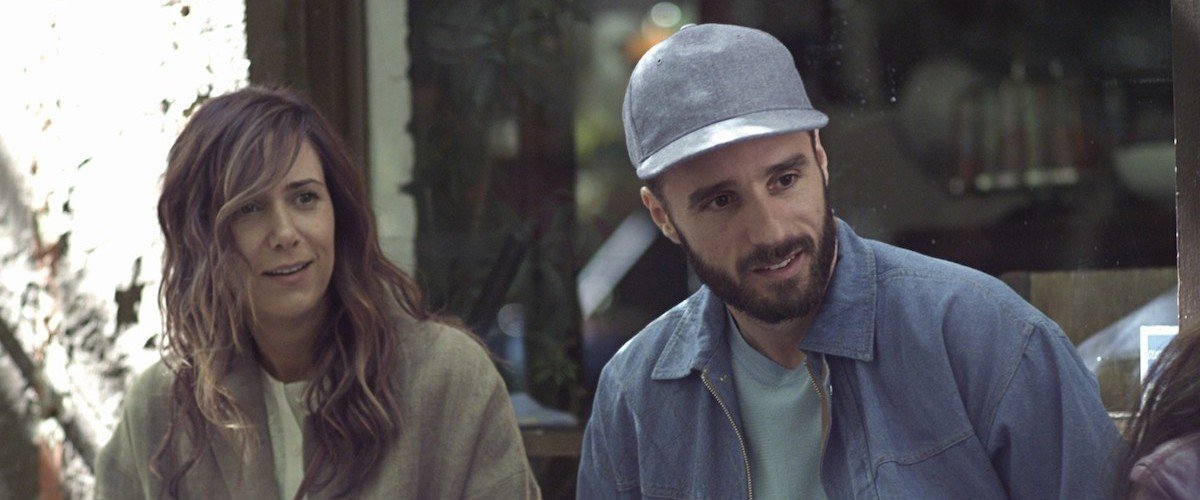
Director Sebastian Silva's Nasty Baby kind of plods along; unhurried and un-urgent, until it takes a grisly turn; which, in a movie of this ilk, seems very contrived and absurd. But until it reaches that narrative turnpike, it doesn't seem to be about anything except a gay couple trying to have a baby with the help of their close female friend, who expects to share parenting chores.

Silva plays Freddy, a performance artist who, with his life-partner Mo (Tunde Adebimpe), is hoping to become a parent with the help of their friend Polly (Kristen Wiig). Unfortunately for the three would-be parents, tests have proven Freddy to be infertile. Impregnating Polly falls on Mo's shoulders, who expresses his reservations about being the donor.

While the three cope with fertilization and the prospect of parenting, Freddy develops a performance piece for a gallery relating to babies, which entails being curled up on the floor, making various infant sounds.

Another problem arises when Freddy and Mo's mentally unstable, downstairs neighbor; known as The Bishop (Reg E. Cathey), begins operating his leaf blower at an unreasonably early hour. Though Mo is able to endure the noise, Freddy becomes exasperated. He shouts imprecations from his apartment window, which go unheard in the blower's din. But The Bishop's disruptive behavior isn't relegated to leaf-blowing, for he begins sexually harassing Polly on the street and directing hate-filled, homo-phobic comments at Freddy. Bishop's behavior becomes more threatening until a cop is later forced to intervene. The cop assures Freddy and the other neighbors that The Bishop's apartment is to be sold in a matter of days, which will effectively end the torment he visits on the residents. But Freddy's next encounter with The Bishop leads to a violent confrontation and a tragic mishap before a more drastic act rids Freddy and the community of their problem. More shocking (or what is supposed to be) is Freddy's subsequent act of self-preservation, which involves not only Mo and Polly but another neighbor as well.

Silva lulls the audience into complacency and near boredom in the first half of the film to create a jarring contrast with the pivotal scene which follows in the second. The shock value should be considerable only it is hard to accept what happens when it feels as though Silva is prodding the story in a direction that seems implausible. That Freddy is driven to a violent exchange makes sense, as does the subsequent life-threatening injury to The Bishop but what follows seems more grand guignol than the realism the story embraces before. I know Silva would like us to think about the irony of three people eager to bring life into the world suddenly taking it out but its a fascinating idea that requires a story that works. I couldn't help but roll my eyes though what happens to The Bishop satisfied my curiosity about where such a deliberate but seemingly directionless story might go. For me, the dramatic shift seemed too outrageous. For the sensational plot turn to work, we have to believe the characters are capable of what Silva suggests. I'm sorry; I just couldn't believe.

The film is a nice effort but it falls short. After the climactic scene, I lost complete interest in the story and waited impatiently for it all to end.

Silva is a talented director; a claim substantiated by his 2009 effort The Maid, but this film, though a miss, nevertheless earns plaudits for its narrative ambition.

Nasty Baby isn't as nasty as it would like to be but it tried. In showing Freddy and his friends writhing on the floor, uttering baby noises, Silva would like us to draw a connection between our infantile nature and adulthood though I'm not completely sure what statement he is trying to make. He may be saying that we are always subject to uncontrolled, infantile impulses, which carry into adulthood. Interesting idea; not so interesting film.

Monday, November 2, 2015

Burnt


**Spoiler Alert**

Director: John Wells/Starring: Bradley Cooper, Sienna Miller, Daniel Bruhl, Omar Sy, Emma Thompson, Uma Thurman, Alicia Vikander and Matthew Rhys

With a globally diverse and talented cast such as that in Burnt, one might expect the movie's success to be a foregone conclusion but unfortunately a movie's quality isn't solely determined by its actor's substantive talents. At the epicenter of the film's impressive actor roll call is Bradley Cooper, who brings a touch of glamour and impressive acting chops to the role. Too bad said talent, which includes seasoned writer Steven Knight (Pawn Sacrifice, Locke) and director John Wells (The Company Men), couldn't pull this film off. Part of the problem is the character of Adam Jones; a hot-shot chef with overpowering bravado, played by said Mr. Cooper. It isn't that I can't buy the idea of a world class chef being hounded by French drug dealers and rival chefs while seeing a psychiatrist and being chick flypaper. But I couldn't buy it. At least not in the way Wells and Knight conceive the character. Though the film is fun to watch, its flavor fades as fast as a Big Mac, rather than lingering like the gourmet cuisine prepared onscreen.

The lead character in question; Adam Jones, has recently arrived in London after having sabotaged his prestigious position as head chef in a Parisian restaurant and slumming in a New Orleans seafood joint, shucking oysters for a living. Fed up with his itinerant life and wasting his culinary talents, Jones settles in London, hoping to assemble a crack kitchen staff for his new restaurant venture. But isn't enough to open an acclaimed restaurant; Jones' arrogance and ambitions crave something more lofty: a 3 star rating from the venerable Michelin Guide.

Standing in his way are said drug dealers, who appear often to collect a sizable debt. Other obstacles are those he has essentially screwed over; who make up a considerable number. Among them is Tony (Daniel Bruhl), who runs a restaurant in a hotel owned by his father and whose Parisian restaurant was ruined by Jones' self-destructive behavior. Jones bullies Tony into letting him take over his floundering hotel restaurant. Funding for the restaurant is contingent on Jones staying sober and drug free, which is accomplished by his psychiatrist; Dr. Rosshilde (Emma Thompson), who administers regular blood tests while also dispensing on-the-fly advice and guidance.

All that remains is for Jones to recruit a team. The film's cinematic touchstone is a famous western, which Jones refers to when he says "I want a crew like The Magnificent Seven." How he goes about assembling them might remind one of the recruitment process in said film. His fame in culinary circles is enough to attract talent though another former colleague, Michel (Omar Sy), chases Jones through the streets and gets into a scuffle with him before agreeing to join his staff. Jones' history with Michel, like many of his former relationships, is fraught with betrayal. It comes to light that Jones once deliberately sabotaged Michel's own restaurant venture, which involved a dirty trick with the health inspector. Why Michel would agree to join Jones' staff becomes apparent later in the film. And of course where would a handsome lady's man chef be without a beautiful and talented she-chef to provide eye-candy and romance for the audience? A woman named Helene (Sienna Miller, teaming up with Cooper again); a talented chef in her own right, is aggressively pursued for Jones' kitchen and as we expect, becomes his love-target.

In Jones' mad pursuit of the 3 star Michelin rating, he becomes monstrous; throwing tantrums and humiliating everyone in his kitchen. Being the best means being a perfectionist and being so means being a SOB, which the staff quickly learns. Destroying dishes in a violent sweep of a counter, shouting in the faces of his colleagues like a drill sergeant; Jones pushes everyone, including Tony, who stands to inherit the hotel and the restaurant.

In trying to anticipate the Michelin operative's unannounced appearances, Tony informs the waitstaff about their tendencies, which generates tension and suspense.

And as Jones chases the ultimate restaurant prize, we know his past will rear its ugly head with drug dealers and a former colleague/now rival chef named Reece (Matthew Rhys) and a revelation about Tony and the film's twist; which involves Michel. We also know he'll have a crisis of self-doubt, where he falls off the wagon and makes a drunken fool of himself. It all seems programmed and mapped. Or as Jones says to Helene while they sit inside a Burger King: "the problem with the (Burger King) food is that it is consistent." Ditto for the screenplay.

Like many well-cast films that falter, the actors give us something to admire when the story fails. Sienna Miller, who shares terrific, onscreen chemistry with Cooper, keeps the audience interested in her character when it's clear she has few places to take it. The same can be said for Daniel Bruhl; who I always find fascinating. I wanted to see Emma Thompson onscreen more but she makes do with the bone she's thrown.

We see the kitchen staff tend to the tiny details of food preparation, which is fine but the food doesn't stimulate one's taste buds, the way it does in films like Babette's Feast or Big Night. The food looks fit to frame but frankly, not to eat. Or maybe haute cuisine is out place on a multiplex screen?

I left the film; not with an appetite but disappointed that the story seemed so mechanical. It was watchable and an effective time-killer but it left me cold. Do all the chefs on T.V. have Adam Jones' problems? Did Julia Childs? I hope not. But after watching Burnt, you might feel cooking is a violent, degrading experience whose only reward are stars in a guidebook. What a pity.