Showing posts with label Kristen Wiig. Show all posts

Sunday, July 17, 2016

Ghostbusters


**Spoiler Alert**

Director: Paul Feig/Starring: Kristen Wiig, Melissa McCarthy, Kate McKinnon, Leslie Jones, Chris Hemsworth, Ed Begley, Jr., Charles Dance, Cecily Strong and Andy Garcia

So along comes the Ghostbusters reboot with its mostly female cast. Never has a movie been dissed and hissed more prior to its release. The internet has been rife the last year with anti-Ghostbusters diatribes and hate campaigns, particularly after the trailer became accessible. The question, which seems more rhetorical now, is: does the movie deserve the venom, the vitriol and contempt fans of the original have reserved for this iteration? No. But that doesn't mean it's worth a plug nickel either. At the risk of incurring the scorn and wrath of the internet, I have to say the idea of having an all-female cast wasn't unsound but the original Ghostbusters isn't just any movie. It's a comedy classic and the beloved of millions (including myself), who don't want to see an inferior reboot sully the original's sacred aura. Maybe I'm rhapsodizing, but you get the point.

While this version offers a few chuckles and an okay plot, it is also stands undistinguished among the summer's other bummers. It doesn't hurt that the production featured director Paul Feig; who lent his talents to two terrific comedies featuring female leads: Bridesmaids and Spy. But lots of CGI and some intermittently amusing repartee couldn't free the film from the sticky goo (as we see copiously in the movie) of mediocrity. A simple question might be: did this really have to be made? Does this mean other movie classics with male casts will now be re-imagined with women? What's next, a distaff The Dirty Dozen? Reservoir Dogs? The Good, The Bad and The Ugly? Brothers and sisters, I've learned anything is possible.

Kristen Wiig plays Erin Gilbert; a professor at Columbia hoping to secure tenure though an embarrassing book she co-wrote with a friend on the paranormal has resurfaced on Amazon, which threatens her academic career. Gilbert seeks out her former collaborator and friend, who is head of a scientific research department at a small college. She finds her co-author, Abbie Yates (Melissa McCarthy) in her lab with her assistant; a tech nerd named Jillian (Kate McKinnon). Gilbert scolds her erstwhile friend while Yates dredges up old grievances. As the two women bicker, a visitor interrupts with a request for an investigation into a ghost sighting. Yates and Jillian depart eagerly while Gilbert, ever the skeptic, follows along reluctantly. Though the malevolent apparition makes a believer out of Gilbert, the video of the incident makes its way to YouTube, where it is mocked and derided. Gilbert is subsequently dismissed from her job but joins Yates and Jillian in a new scientific venture investigating paranormal claims.

After the three women find their prospective headquarters in a firehouse too pricey, they settle for a place above a Chinese restaurant. Before long, an MTA worker named Patty Tolan (Leslie Jones) arrives at their office; seeking their help in solving the mystery of a ghost who menaces the city subway system. After capturing the ghost, Tolan makes a plea to join the their group, which they accept. Though a proper name for their organization eludes them, a derogatory comment on the television referring to them as Ghostbusters inadvertently provides a moniker. Tolan borrows a hearse from her uncle, which becomes their means of transportation (replete with the now famous logo). The women also take on a beefcake receptionist named Kevin (Chris Hemsworth), who Gilbert can't seem to resist.

Meanwhile, a wacko named Rowan North (Neil Casey) has been busy skulking about the city, involved in his own activities connected to the paranormal. Though we know his agenda, who and what he is is divulged later.

The Ghostbusters first assignment is to investigate a haunted concert hall, which finds them face to face with a large, ectoplasmic, green dragon the audience thinks is part of the show. Using the particle accelerators developed by Jillian, they blast away at it in vain.

It isn't long before the Ghostbusters learn of North and his plans to open a portal to the ghost world, which will bring about a ghost apocalypse. The Ghostbusters are summoned by the Mayor (Andy Garcia) and his assistant Jennifer Lynch (Cecily Strong) to deal with the problem, which leads to a big, CGI-laden showdown.

Though the characters and plot particulars are somewhat different from the original, we still know where the story is headed. In spite of some able comediennes, who are all funny in their own way, they can't make the material more than just a little amusing. This version can't stimulate guffaws the way the original could and did. McCarthy and Wiig shoulder most of the comedic load though they get solid contributions from McKinnon and Jones. Hemsworth is the attractive, bubble-headed receptionist (a character type once reserved for women but now open to men) who fails to generate any laughs.

Why doesn't this movie work? I could spend an afternoon addressing that question but it's just too involved. I've already cited one mistake, which is rebooting something that shouldn't have been rebooted. Another are the gags, which just aren't that funny. And the omnipresent slime, which was used to great comic effect in the original, is wildly overdone here. The scene where Yates first tries the particle accelerator (or whatever it is) and is bounced around an alley is okay but again, it rouses a smile rather than a hearty laugh.

The cameos are fun but rather than just paying homage to the original characters, their presence made me long for the first movie. Some ghoulies from the original make an appearance as does the firehouse the team eventually inhabits. But the familiar faces and places just seem like nostalgia.

In case you're wondering, the question of whether a sequel is in the works can be answered after the credits conclude. Being that movies no longer need be good to spawn sequels, even this flimsy flick can't be dismissed as a one off. Rest assured the public's violent antipathy to the making of this film will hardly dissuade the studio from green-lighting another.

I've already forgotten most of the film, which is a blessing. Can't anyone make a passably entertaining summer blockbuster anymore? Guardians of the Galaxy 2; where art thou?

Wednesday, November 4, 2015

Nasty Baby


**Spoiler Alert**

Director: Sebastian Silva/Starring: Kristen Wiig, Sebastian Silva, Tunde Adebimpe, Reg E. Cathey, Mark Margolis, and Alia Shawkat

Director Sebastian Silva's Nasty Baby kind of plods along; unhurried and un-urgent, until it takes a grisly turn; which, in a movie of this ilk, seems very contrived and absurd. But until it reaches that narrative turnpike, it doesn't seem to be about anything except a gay couple trying to have a baby with the help of their close female friend, who expects to share parenting chores.

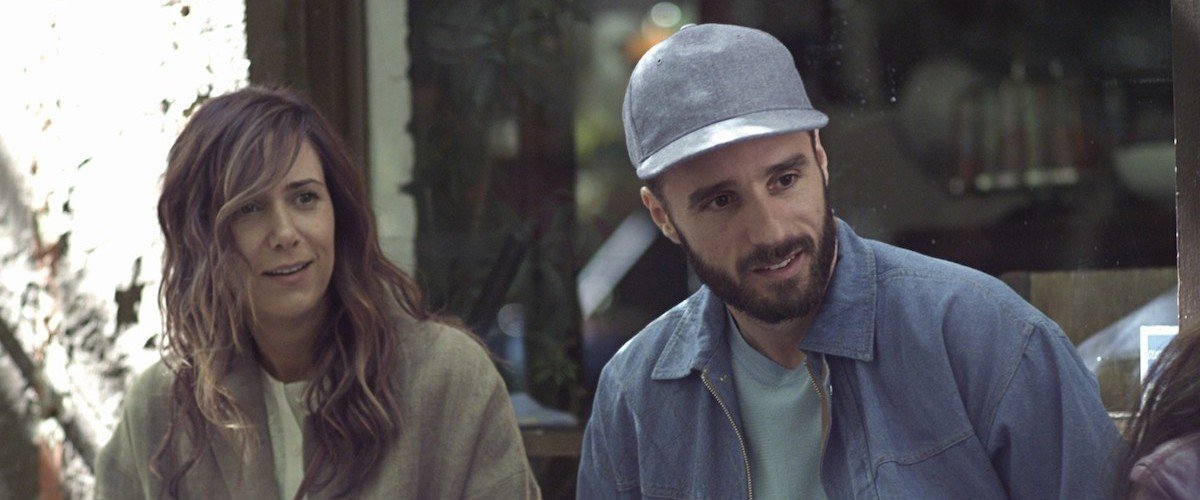
Silva plays Freddy, a performance artist who, with his life-partner Mo (Tunde Adebimpe), is hoping to become a parent with the help of their friend Polly (Kristen Wiig). Unfortunately for the three would-be parents, tests have proven Freddy to be infertile. Impregnating Polly falls on Mo's shoulders, who expresses his reservations about being the donor.

While the three cope with fertilization and the prospect of parenting, Freddy develops a performance piece for a gallery relating to babies, which entails being curled up on the floor, making various infant sounds.

Another problem arises when Freddy and Mo's mentally unstable, downstairs neighbor; known as The Bishop (Reg E. Cathey), begins operating his leaf blower at an unreasonably early hour. Though Mo is able to endure the noise, Freddy becomes exasperated. He shouts imprecations from his apartment window, which go unheard in the blower's din. But The Bishop's disruptive behavior isn't relegated to leaf-blowing, for he begins sexually harassing Polly on the street and directing hate-filled, homo-phobic comments at Freddy. Bishop's behavior becomes more threatening until a cop is later forced to intervene. The cop assures Freddy and the other neighbors that The Bishop's apartment is to be sold in a matter of days, which will effectively end the torment he visits on the residents. But Freddy's next encounter with The Bishop leads to a violent confrontation and a tragic mishap before a more drastic act rids Freddy and the community of their problem. More shocking (or what is supposed to be) is Freddy's subsequent act of self-preservation, which involves not only Mo and Polly but another neighbor as well.

Silva lulls the audience into complacency and near boredom in the first half of the film to create a jarring contrast with the pivotal scene which follows in the second. The shock value should be considerable only it is hard to accept what happens when it feels as though Silva is prodding the story in a direction that seems implausible. That Freddy is driven to a violent exchange makes sense, as does the subsequent life-threatening injury to The Bishop but what follows seems more grand guignol than the realism the story embraces before. I know Silva would like us to think about the irony of three people eager to bring life into the world suddenly taking it out but its a fascinating idea that requires a story that works. I couldn't help but roll my eyes though what happens to The Bishop satisfied my curiosity about where such a deliberate but seemingly directionless story might go. For me, the dramatic shift seemed too outrageous. For the sensational plot turn to work, we have to believe the characters are capable of what Silva suggests. I'm sorry; I just couldn't believe.

The film is a nice effort but it falls short. After the climactic scene, I lost complete interest in the story and waited impatiently for it all to end.

Silva is a talented director; a claim substantiated by his 2009 effort The Maid, but this film, though a miss, nevertheless earns plaudits for its narrative ambition.

Nasty Baby isn't as nasty as it would like to be but it tried. In showing Freddy and his friends writhing on the floor, uttering baby noises, Silva would like us to draw a connection between our infantile nature and adulthood though I'm not completely sure what statement he is trying to make. He may be saying that we are always subject to uncontrolled, infantile impulses, which carry into adulthood. Interesting idea; not so interesting film.

Sunday, October 4, 2015

The Martian


**Spoiler Alert**

Director: Ridley Scott/Starring: Matt Damon, Chiwetel Ejiofor, Jessica Chastain, Jeff Daniels, Michael Pena, Sean Bean, Kate Mara, Mackenzie Davis, Kristen Wiig, Benedict Wong and Donald Glover

At last; after suffering through so many mediocre Ridley Scott movies, the director finally scores big with his latest film: The Martian. Scott, always one to confuse dazzling special effects for gripping storytelling, finds a happy medium here; making his new film his most complete cinematic effort this century. Science fiction films have experienced a resurgence in recent years with renewed storytelling vigor. Films like Interstellar and Gravity are more recent examples. Scott's film continues that trend with a smart, spellbinding drama that is both powerful and visually captivating.

Based on the novel by the same name, The Martian tells the story of an astronaut named Mark Watney (Matt Damon); a botanist who is part of an expedition exploring the surface of Mars. The NASA team, led by military-affiliated Melissa Lewis (Jessica Chastain; as wonderful as always), finds itself caught in a violent sandstorm that threatens to not only topple their capsule, but to endanger their lives as well. In the struggle to return to the capsule, Watney is blown backward when a satellite dish strikes him; leaving his whereabouts unknown in the howling tempest. Unable to perform a rescue, the team is forced to leave Watney behind as they narrowly escape in their capsule, which transports them to the safe environs of their mother ship, the Hermes.

Back at NASA, Director Teddy Sanders (a terrific Jeff Daniels), Mission Director Vincent Kapoor (an excellent Chiwetel Ejiofor) and Director of PR Annie Montrose (an exceptional Kristen Wiig) break the news of Watney's passing to the world, which causes a global outpouring of grief. Meanwhile, the Hermes crew heads for Earth with heavy hearts.

But the next Martian day, as camera tracks slowly over the red, deserty landscape, we see Watney partially buried in sand; his suit life supports systems still functional. When he awakes, he finds a small, metal rod; formerly part of the antenna, sticking out of his side. In pain and running low on oxygen, he makes his way back to the habitat. Safely inside, he immediately tends to his injury, which involves procedures that are mildly graphic.

Shortly thereafter, Watney begins a videolog of his efforts to stay alive, which also serve as a kind of narration for the movie and a way to make the science and technical aspects accessible to the audience.

What follows after demonstrates Watney's heroic resolve as he makes a vow to stay alive. We see him take stock of the finite food supply, which he determines will keep him alive for a little over 365 sols; the unit of time by which the mission measures days. Realizing NASA has a follow-up, manned mission in four years, Watney formulates a long-term survival plan which involves finding a way to grow food in unsuitable Martian soil and a water source in which to feed it. How he manages to accomplish both is a testament to Watney's mind-boggling ingenuity.

Back on Earth, NASA mission personnel discover that Watney may in fact be alive after watching time-lapse satellite photos of the habitat, which shows the rover Watney has been driving parked in different locations. The possibility that Watney might be alive sets off a firestorm within NASA, which presents Sanders, Kapoor and Montrose with the problem as how to present such a development to the world. When satellite photos also record Watney's peripatetic wanderings in the rover, they begin devising a way to communicate with him, which is mainly abetted by another clever move on Watney's part, which involves a serendipitous moment in the film I won't reveal here.

How Watney communicates with Earth--NASA specifically, is another inspired sequence, which involves the help of the Jet Propulsion Laboratory, who designed most of the mission hardware. The JPL leader, Bruce Ng (Benedict Wong), becomes a key character in the film and an indispensable part of the effort to help Watney.

Aware of Watney's limited supply of food and life support, Sanders, Kapoor and Ng devise a way to resupply him before the next scheduled manned mission. Pushing ahead with a launch that circumvents testing procedures, the rocket fails but help arrives from an unlikely collaborator: the Chinese. Recognizing Watney's dire situation, the Chinese offer NASA a rocket of their own.

Not long after, the Hermes crew is finally apprised of the Watney's situation, which Sanders and Kapoor hoped to avoid. When the Hermes crew suggests a rescue, Sanders rejects the idea; citing the problem of adding an extra 580 sols to their mission. But the Hermes crew decides to forge ahead anyway, aware that their actions will be considered mutinous.

The rescue attempt in the gripping third act entails formidable maneuvering by both Watney and the Hermes crew, as well as the interplay between NASA and the JPL.

Like Interstellar, The Martian offers us a story both visionary and intelligent. Of course it helps to have an imaginative book and a brilliant adaptation from which to draw inspiration. Screenwriter Drew Goddard, who penned Cabin in the Woods and adapted World War Z, is the perfect choice to interpret Andy Weir's book. His dialogue scintillates and he sustains a refreshing level of intelligence; never dumbing the story down for a minute.

So many performances, particularly Matt Damon's, make the story seem so real and heartfelt. I especially enjoyed watching and listening to Jeff Daniels, Chiwetel Ejiofor and Kristen Wiig's verbal sparring.

I had mixed feelings about the disco soundtrack and the use of David Bowie's Starman but both give the film more human color and manage not to be too intrusive.

Polish cinematographer Dariusz Wolski gives us a very realistic-looking Martian landscape; both mysterious and beautiful. I'm guessing the Jordan desert stood in for Mars; the rocky crags can also be seen in Lawrence of Arabia .

NASA may want to thank Ridley Scott for the film. It may single-handedly rekindle interest in a Mars mission.

Aside from the great story, the stunning visuals and the superlative acting, one of the film's major strengths is its ability to stimulate one's interest in science. Botany, physics, astronomy, biology, as well as mathematics and engineering, are made exciting and sexy.

In spite of Watney's troubles, the idea of setting foot on Mars is irresistible. When he sits in the desert, contemplating the alien surroundings, it's hard not to think about how this will become reality in a decade or two.

Scott's film is some kind of marvel and easily one of the year's best. It is an exhilarating adventure and a paean to human tenacity and ingenuity. It is also one of the few films I've seen this year I would consider seeing a second time in a theater. I just may do that.

Tuesday, September 1, 2015

Diary of a Teenage Girl


**Spoiler Alert**

Director: Marielle Heller/Starring: Bel Powley, Kristen Wiig, Alexander Skarsgard, Christopher Meloni and Madeleine Waters

What may be the last teen film of the summer: Diary of a Teenage Girl opened this week at local theaters and I couldn't help but compare it to other films in the genre that have played on screens the last few months. First-time director Marielle Heller's film comes on the heels of Me and Earl and the Dying Girl and Paper Towns, which proves there can never be a glut of coming-of-age films. Of the three summer offerings, I must say Heller's is the superior.
Based on the novel by Phoebe Gloeckner, Diary of a Teenage Girl takes place in early 1970s' San Francisco. 15-year-old Minnie (fearlessly played by British actress Bel Powley) is a budding underground cartoonist in the vein of Aline Kaminsky (legendary comic artist Robert Crumb's significant other). Minnie's home-life is anything but typical. Its freewheeling, free-love atmosphere, is fostered by her mother Charlotte (well-played by Kristen Wiig), a divorcee who enjoys parties, getting high and hanging out with like-minded people.

Aside from her accomplished drawings, Bel's other concern is her eagerness to have sex. She is acutely aware of the boys in class but also her mother's boyfriend Monroe (wonderfully played by Alexander Skarsgard), who she first develops a crush on then fantasizes about. Her daydreams and thoughts are often accompanied by animation (why are there so many indie teen films with animation?) and an animated Aline Kaminsky, who often serves as her counsel and adviser.

What begins as seemingly harmless companionship becomes serious when Minnie is forthright about what she wants to do with Monroe. He scoffs at first then submits to her overture.

The carnal relationship that follows serves as Minnie's sexual awakening as both she and Monroe's clandestine trysts become frequent. Minnie naturally shares her secret with no one save for her best friend Kimmie (Madeleine Waters) who finds the idea mildly repugnant. Before long, Kimmie is joining Minnie in her daring, sexual forays. Pursuing their sexual adventures to an extreme, Minnie propositions two men in a bar one night, which results in an experience both she and Kimmie regret.

While Minnie begins to see her meetings with Monroe as the foundation for a relationship, he regards their sexual encounters as enjoyable larks without emotional entanglements. Minnie is stung by Monroe's casual, non-committal attitude, but their assignations continue, in spite of their conflicting perspectives on their relationship.

But Minnie's carnal curiosity isn't fixed solely on men. Minnie and a young lesbian she meets at a party share a dalliance and a mutual fascination but the relationship leads nowhere and soon becomes a boundary in her sexual frontier.

Though Monroe is able to curb Charlotte's suspicions about his indiscretion, she discovers them anyway. Given Charlotte's own liberation and her progressive attitudes about sex, we see the limits of her tolerance when she visits her rage on Monroe. She even demands Monroe marry her daughter; a command that is more a threat than a directive.

As the relationship begins to cool, Minnie resumes her drawing and sees the relationship with an enlightened dispassion. The scene where the two meet by chance on a sidewalk; she selling her drawings and he out for a jog, has a finality that gives us some sense of Minnie's passage from innocence to experience.

Though the story in Heller's film seems so familiar, it feels as if its never been told before. It's difficult to make any story on this subject seem new and unfamiliar but Heller accomplishes this with little trouble. It is exhilarating to see a female protagonist in this genre; as so many of these films are told from a male perspective.

It is refreshing to see a more self-determined teen female; one who actively seeks sexual a experience without being punished for doing so by priggish moral imperatives. Of course this story only makes sense set in the sexually-adventurous 70s'.

Bel Powley, whose work has mainly been in television, branches out into cinematic territory with her nuanced performance. A whiff of whimsy works its way into her role; giving her teenage plight some humorous touches. No less affecting are Alexander Skarsgard and Kristen Wiig, who are kind of antagonists in Minnie's maturation process.

I found Diary of a Teenage Girl to not only be a credible contribution to the genre but a vividly rendered drama that is impressive in its candor and willingness to not only examine a teen girl's inner life but her fantasy life as well. It is a film that refuses to make concessions to Hollywood teen drama cliches, which these days seem to involve cancer victims or futuristic dystopias. It's nice to know the age-old anxieties about sex and the emotional demands of adulthood are still the subject of some teen dramas. Thank goodness for Heller's film, which allows us to see a real teen with real-world problems before the deluge of the fall franchises The Hunger Games and The Maze Runner distract us with their over-the-top, cartoonish, melodrama.

Tuesday, May 12, 2015

Welcome to Me


**Spoiler Alert**

Director Shira Piven/Starring: Kristen Wiig, Wes Bentley, Joan Cusack, Jennifer Jason Leigh, James Marsden, Tim Robbins, Linda Cardellini and Thomas Mann

Shira Piven's Welcome to Me is one of those films that is so self-consciously weird that its weirdness becomes a tiresome contrivance. It goes well out of its way to be strange but at times it can elicit a chuckle when it isn't trying too hard to be bizarre. Director Shira Piven's film makes a reasonably good entrance, only to stumble then drag itself to a whimsical end.

Kristen Wiig plays Alice Klieg, a manic-depressive living in the fictional southern Californian town of Palm Desert. She spends part of her days in therapy, where Dr. Daryl Moffet (Tim Robbins) administers psychiatric guidance and prescriptions. The other part are spent in front of the T.V., idolizing Oprah Winfrey; lip-syncing her on-screen patter and gleaning morsels of Oprah-wisdom dispensed on air.

Among Alice's possessions are small stacks of losing lottery tickets. In an early scene, Alice tunes in to a televised lottery drawing. As the numbers are called, we see that Alice has won the $86 million (actually a lesser amount for a lump sum) jackpot. Ecstatic and dumbfounded, she can barely breath the words "I'm a winner" into the phone to claim the prize. True to her eccentric nature, she makes a hotel casino her second home then gathers her family and friends for a celebratory meal.

Enthralled with Oprah and her inspirational words, Alice and her friend Gina (Linda Cardellini), visit a live taping of an infomercial at a local T.V. station. During the show, when the host Gabe Ruskin (Wes Bentley) asks for a volunteer to demonstrate a product's effectiveness, Alice is only too eager to walk on stage. The show producer and staff in the booth express dismay when the erratic Alice, commandeers the show with her off-the-wall volatility.

Afterwards, the two brothers who control the station's content; Gabe and Rich Ruskin (James Marsden) invite Alice into their conference room to meet with the production staff. In the course of discussion, Alice lets it be known she wants her own show and when asked what it would be about, she says, "me." Of course the staff, including producer Dawn Hurley (Joan Cusack) and Deb Moseley (Jennifer Jason Leigh) voice their objections, only to be silenced by Alice's $15 million dollar check, which covers the projected production cost of her show.

I don't know about other film-goers, but I always find it excruciating to watch a film about a lottery winner who is hell-bent on squandering his/her fortune on frivolous nonsense. At this point in the film, the total and imminent exhaustion of the fortune seems like a fait accompli.

The show, with its zeitgeist-appropriate title Welcome to Me is naturally a bizarre spectacle that could have been the brainchild of David Lynch and Luis Bunuel.

The show begins with Alice arriving on a swan followed by re-enactments of slights suffered by Alice during her life, which share air-time with cooking segments featuring outlandish and unpalatable culinary creations, like a frosting-topped meatloaf. The staff, looking on in the booth, watch incredulously. The show manages to draw viewers and even a few admirers.

Gabe begins to have qualms about his brother's willingness to exploit Alice. Before long, Gabe and Alice begin a romance, which catches a snag during one of her rage-filled, flights of mental instability. Her erratic behavior and emotional vulnerability begin to impair her judgement. Alice has a fling with a fawning fan named Rainer Ybarra (Thomas Mann) which doesn't escape Gabe's notice.

As the show continues on its weird course and Alice's un-medicated self holds the production staff captive, her self-involved antics begin to wear on her loved ones, particularly her best friend Gina.

I suppose Piven's film is commentary on the narcissism gripping the country and it makes a convincing case of its pandemic reach. Approaching the topic with absurdist humor is a good way to go but the film asphyxiates in its weirdness. Don't get me wrong; I like weird but when it's a film's selling point rather than an element of its storytelling, it becomes a tiresome affectation, as it is here. As the story progresses, Alice's condition becomes less funny and more tedious.

A film like Welcome to Me could only end happily, which it does. Alice comes to acknowledge her ego-centrism and makes an extraordinarily selfless gesture to her best friend Gina.

The supporting cast was quite terrific when given their time though most are consigned to straight-men roles. When you have actors like Robbins and Cusack; who wield considerable comedic ability, exiled to the margins, it becomes a liability.

As previously stated, the film generates a modicum of laughs but I mostly found the movie to be a one-note joke. If manic-depressive narcissists are your company of choice, then Piven's film is for you. I suppose there is a better comedy out there dealing with this small cross-section of American society but that's another film. At least this one makes a case for not skipping one's meds.

Sunday, September 21, 2014

The Skeleton Twins


**Spoiler Alert**

Director: Craig Johnson/Starring: Kristen Wiig, Bill Hader, Ty Burrell and Luke Wilson

The Skeleton Twins is pure independent cinema in every atom of every frame. That isn't a knock but it often feels like it was fitted for an independent film suit before it became a movie. But director Craig Johnson's film can't be shrugged off or dismissed as cliched independent fare, for it is humorously morose and terrifically acted. One might expect Saturday Night Live alums Kristen Wiig and Bill Hader to be in over their heads playing twins who have suicidal issues but the most refreshing surprise about the film are the performances, which are affecting, sometimes funny and convincingly somber.

Bill Hader and Kristen Wiig are Milo and Maggie; said twins whose relationship has been displaced by time and geography. We learn the twins haven't seen one another for ten years; estranged not from rancor or a slight but from the natural drift siblings experience over time.

Maggie has just been called to L.A. from her suburban, New York home to be at her brother's side after his failed suicide attempt. It seems a little too coincidental that Maggie should be contemplating suicide just when she receives the phone call about her brother but it's plausible enough, given the eery, almost supernatural bonds twins often share.

She invites him to stay with her in New York and is welcomed by Maggie's husband Lance (Luke Wilson), who seems to be the complete anithesis of everything gay in Milo's personality. As Milo settles into his stay, the siblings and Lance are joined one night for dinner by their new age-besotted mother Judy (Joanna Gleason), whose hokey, spiritual nonsense the twins regard with little more than weary contempt. Maggie makes a point of expressing her disdain for Judy's lousy maternal record, which her mother acknowledges but without contrition. During the course of the film, we learn Milo and Maggie's father committed suicide; a family tragedy from which the twins inherit much psychological baggage.

As Milo finds himself back in his hometown, he visits a former lover, Rich (an excellent Ty Burrell); a former school teacher now bookstore manager. Rich lost his teaching job after his illicit affair with Milo, who was a mere teen-ager at the time. Though the scandal was kept underwraps, Milo's feelings for Rich endure. Rich's reaction to Milo's presence is dismissively hostile, especially after he makes his huband/father status known to him. This hardly discourages Milo as continues to pursue his former lover throughout the story.

We discover Maggie is no happier in her life. Her repeated efforts to have children with Lance have come to naught, which we learn she has sabotaged by secretly taking birth control pills. Though Lance is a good husband--though blandly so--Maggie's dissatisfaction with her marriage is palpable. Maggie also takes classes as an anodyne to the boredom suburban life visits on her. One such class leads to a romance that develops between Maggie and her scuba-diving instructor; a handsome, tattooed Australian or the male incarnation of everything a bored, unfulfilled housewife might desire.

As the story progresses, we see how screwed-up and unhappy the twins are and how they only have objective clarity when considering the other's problems, never their own. Maggie becomes incensed when she learns Milo is seeing his former teacher; a person she sees as seedy while Milo can't understand why his sister witholds truths about her marriage and reluctance to be a mother from Lance.

Some very interesting developments arise. Instead of the film building to a sentimental explosion of forced, tidy outcomes, more unhappy upheaval ensues. A crumb of hope remains but the story clings to messy, open-endedness, which feels truer to life.

We expect Wiig and Hader to handle the film's funnier moments, which they execute with ease but I didn't expect the actors to negotiate the gloomier, more dramatic scenes with power and restraint. Ty Burrell brings so much to the film; his scenes with Hader have urgency, longing and the shame of a life lived dishonestly.

The film makes an honest assessment of the characters and though they seem weighted down by their problems, they are never less than real and make very stupid and very human decisions for which we can empathize. In Craig Johnson's film, we're never allowed to rest where Milo and Maggie are concerned. They are volatile and we're never quite sure how they'll respond to disappointment or the more tragic realities of their lives. Wiig and Hader's performances make for a satisfying film experience even after an ending that seems a little deus ex machina. If it's the film's most glaring misstep, it doesn't scuttle or trivialize what comes before.